Unknown's avatar

About Tyrannicon

Made of fire and caffeine from the very depths of nature's space - of the future.

The Only Sane Way To Watch The Star Wars Films Before The Force Awakens

Dear The Internet,

So, you’re correctly excited about the forthcoming Episode 7 and you want to rewatch the old films, or get your child/niece/nephew up to speed before they see their first ever SW film in the cinema. However, there’s a problem.

Do you watch the films in release order – the original trilogy followed by the prequel trilogy – or do you watch them in George Lucas’ suggested order of one-through-six?

What, so "thumbs up" is a thing in a galaxy far, far away?

What, so “thumbs up” is a thing in a galaxy far, far away?

Or, to put it another way: do you waste seven hours watching rubbish films before or after the good ones?

The natural response is to ignore the prequels altogether, but that’s impossible now thanks to George Lucas’ meddling with the Saga that’s currently available: most notably because of the digital replacement of Sebastian Shaw with a glowering Hayden Christensen as the ghost of Anakin Skywalker at the end of Return of the Jedi.

However, there is a solution. It was first outlined in 2011 by US fan Rob Hilton, who explained it on his blog Absolutely No Machete Juggling, and it remains the definitive way to watch the Star Wars saga.

Machete Order goes like this: A New Hope (episode IV, aka “Star Wars”), The Empire Strikes Back (episode V), Attack of the Clones (episode II), Revenge of the Sith (episode III), Return of the Jedi (episode VI).

In other words: the original trilogy with a two-film flashback after Luke discovers the truth about his father, and no Phantom Menace at all. At all.

And it works for so, so many reasons. For example:

  1. All the stuff you hate is gone.

Without The Phantom Menace there’s no more Galactic Senate discussions about taxation of trade routes; no nonsense about the Force coming from midichlorians; less of the cartoonish racism of the various foreign-accented alien species; and no Jake Lloyd as tow-headed, “Yipee!”-shouting child-Anakin, much less the bit about his being a virgin birth. You also lose Darth Maul, admittedly, but he’s little more than an interesting looking prop.

  1. Barely any Jar Jar Binks

Without TPM the worst Star Wars character ever is just part of Amidala’s senatorial staff. You don’t need to know that he had a stupid adventure with Obi-Wan and Anakin any more than you need to know that Obi-Wan had daddy issues with his mentor, that Anakin built C-3PO, or that the Clone Wars were started by a tax dispute. All the bits that actually affect the story are re-established in Episode II.

  1. Anakin makes more sense

With TPM, we meet the future Darth Vader is an adorable tyke. Without it, the first time you see Anakin he’s creeping out his old friend Amidala with his weird, entitled intensity when he’s supposed to be acting as her bodyguard (“She covered that camera,” he whines to Obi-Wan, “I don’t think she liked me watching her”). The idea that this hot-tempered, sexually-confused magical space wizard would be a danger to everyone around him seems less an tragedy of circumstance and more an obvious consequence of bad parenting. Speaking of which…

  1. Obi-Wan makes more sense

There’s a throwaway line in The Empire Strikes Back where Kenobi says of Anakin “I thought that I could train him as well as Yoda. I was wrong.” But again, without TPM the first thing we see of Obi-Wan is failing to reprimand his apprentice for throwing a tantrum, showing Obi-Wan less as a noble Jedi Knight and more like David Brent in The Office, blithely failing at being either friend or boss. “Wrong” becomes a mighty understatement.

  1. The plot points are preserved

You know how there’s a fairly large twist in The Empire Strikes Back that’s somewhat undermined if you’ve just watched three films establishing that Vader is Luke’s father? Machete Order preserves it.

  1. It ups the stakes for Return of the Jedi

By taking a little side-journey before going into the final instalment, we see that badly-trained Jedi become dangerous monsters, and that Yoda was defeated by the Emperor. So when we meet Luke in Vader-shaped silhouette at Jabba’s palace, casually force-choking his guards, it raises the genuine possibility that he’s started down the dark path Yoda warned him about. Similarly, the final battle against the Empire changes from matched space armies led by sorcerers to a scrappy militia of flawed characters versus an established government led by an evil tactical genius with endless resources. That’s a victory definitely worthy of an Ewok dance party.

Machete Order, friends: it’s the only sane way to rewatch the Star Wars Saga.

Unless it turns out that Jar Jar really is the main villain in The Force Awakens, of course…

Why Marriage Is Nice

Dear the Internet,

I don’t want to go on and on about marriage equality – after all, it’s going to be passed eventually in Australia, bring people nothing but security and happiness and make exactly zero difference to anyone else.

However, there’s an argument that gets used a fair bit – heck, Mark Latham used it on The Verdict only last night as a way of telling gay people to stop annoying him about the issue, which is what reminded me of it – which is that you don’t need a piece of paper to validate your partnership.

And that’s absolutely correct, just to be clear. You can support marriage equality as the removal of a pointless piece of discrimination without feeling that you need to enter into it yourself, or necessarily support the institution. I know plenty of people that don’t see the need to do it themselves, and it makes no difference to the strength of their relationship – and neither does it mean they can see any reason to deny others the option simply because they don’t need it themselves.

However, I’d like to explain why I am a fan of marriage. It definitely changed things – just not between, y’know, the two people that got married. We were pretty damn into one another before we got hitched, and we remain so today.

Seriously, best day. How goddamn good to we look? Amazing. Photo by Anna Kucera

Seriously, best day. How goddamn good do we look? Amazing. Photo by Anna Kucera


That’s because weddings aren’t just about the people that wed, as I learned in 1989, the year my mother and stepfather got married.

Both were sole parent to three children apiece, families they’d created with their late spouses.

He’d moved interstate to be with mum, which wasn’t an easy thing for his family, and was living next door to our house so things were still very separate. The plan was that we’d all live in the one house after the marriage – and I, as the eldest, had already kinda figured that I’d be there for a couple of years at the absolute most so had the least to lose from the arrangement.

It was a volatile time for all eight of us, with the marriage bringing up a lot of fairly predictable grief for the six kids aged between seven and seventeen who had lost parents and could see their lives once again changing dramatically.

Even so, we six kids did get along pretty well among ourselves, even if there were differing levels of enthusiasm about blending our families, and a few excitingly dramatic screaming matches (But there was also Press Gang and Degrassi Jr High – yes, ABC’s Afternoon Show with James Valentine/Michael Tunn, you were the scaffolding upon which our family’s fragile bond was constructed.)

The wedding was very nice – lots of family and friends and people saying lovely things – but much to my surprise, something fundamental changed in the wake of it.

I didn’t think my relationship with Lance would change all that much at the time, since I really liked the guy and was glad he was marrying my mother. But my relationship with my stepfather’s family changed dramatically – his sister was now my auntie, his parents were now my grandparents, and most importantly his children were now my siblings. These people were now going to be part of my life for the foreseeable future. And something just… clicked.

I’m not going to pretend it was all smooth Brady Bunch sailing from then on in, but the struggles that followed were those of a family. And not to put too fine a point on it, the six of we sibs are still stupidly close. It helps that my brother and sisters are all amazing human beings, admittedly, as are the growing number of in-laws and children that have joined the tribe since.

I felt the same thing in May when I married my wife: there was a shift in my relationship with her brothers, her parents and (especially) her nieces. That’s because when you’re a kid there’s a fundamental difference between a chap being some-guy-that’s-seeing-your-Auntie, and being Your Uncle – not least because it makes clear that this person will be sticking around, and is another adult that can be relied upon.

And of course the other way for kids to know that someone’s there for a long time and can be relied upon is, you know, for them to be around for a long time and be consistently reliable. Again, the paper doesn’t change things – but we’re a species that responds well to symbolism and ritual. I still melt a little bit inside whenever my nieces call me Uncle Andrew, even if it usually means I’m about to run around the park with one or more of them on my back.

Also, as I made clear at the time, outside of weddings how many opportunities do you have in life to stand up in front of all the people that you adore most in the world and say “seriously, how good is love?” Not nearly enough, if you ask me. And it’s something well worth celebrating.

So: can we get this stupid niggling civil injustice sorted out, Australian Parliament? That’d be great.

Yours ever,

APS

Sydney book launch, another lovely review, shameless attention-seeking

Dear the Internet,

So the Sydney Morning Herald have reviewed …Captain Abbott – more specifically, they ask the author Anson Cameron to review it – and he was very, very kind indeed.

In fact, the review is both glowing, and also really beautifully written: I wish I’d come up with a metaphor as strong as “politics is a black swamp that breeds this type of animal, a place from which another Abbott will soon stumble, breathing his repetitious dreck. The Captain was just the latest political reptile to dig his way to the sun from the depths of the compost in which those eggs are, even now, incubating.”

(And yes, I do write for the Herald – as you probably realise, and which they acknowledge in the review. However, I don’t write for the Weekend Australian and they also reviewed it positively, and with great style, so th… hold on, am I the thing that News Corp and Fairfax agree upon? ANDREW P STREET, UNITER OF WORLDS!)

APS, earlier

APS, earlier

Also, if you’re in Sydney on Tuesday December 1st and would like to enjoy the pleasant experience of watching TV’s Marc Fennell – you know, the author, broadcaster and genuinely lovely human being that’s on SBS, Triple J and loads of other things – have a chat with me at Gleebooks, you should book yourself some tickets because I’m assured they’re selling at a healthy clip. And yes, I’m as surprised as you.

In case you’ve not read the acknowledgements/blame chapter at the end of the book, it was Marc that very kindly convinced me that I could write the thing when I was first approached by Allen & Unwin and was certain that I couldn’t possibly do it. So he’s significantly culpable, really. Indeed, on the night I’m basically going to accuse him of being Accessory to the Book.

I will also be signing copies the book, so bring it along if you already have one and want me to deface it, thereby significantly diminishing its resell value.

And not that I’m wanting to bring a venal, commercial element into this discussion, but Xmas is coming up and my publishers have inexplicably rejected by suggested advertising campaign “The perfect gift for the lefty in your life, or the conservative type that you’re obliged to buy something for and want to annoy”.

So instead I will quote Peter Humphries’ review at Amazon: “it is well crafted very funny and all the things in it can be referenced as fact , this will make a great CHRISTMAS Present.”

You make a strong case, Peter Humphries on Amazon. A very strong case indeed.

Yours ever,

APS

Book! BOOOOOOOKKK!!!

Here's the book cover! If you pass by a book store and see this, put it at the front of the display.

Here’s the book cover! If you pass by a book store and see this, put it at the front of the display, and then knock all the other books on the floor.

Well, The Short and Excruciatingly Embarrassing Reign of Captain Abbott is out in stores now – seriously, I’ve seen it with my own eyes! – and I have literally zero idea of how well it’s doing beyond seeing people post photos of their new purchases on Facebook and Twitter. Which I appreciate beyond all measure, might I just add. Please don’t stop.

In the event that you feel like praising and/or complaining about the book on Goodreads, please do. Here’s the link: let your restless muse take flight!

And the first review was at The Weekend Australian by Richard King, and it was very reasonable indeed. And the comments, predictably, are hilarious.

There’s also an interview with me at The Clothesline, the arts and culture portal from my former hometown of Adelaide, in which you can correctly assume that every ellipsis is me rambling for minutes at a time. Dave Bradley did a fine job of editing me down.

And if you’ve read the book and thought “I wonder if this jerk has a website” then yes, I do and this is it. I know, I expected there to be more here too. But: if you check out the View from the Street page you’ll see that I write five – FIVE! – freakin’ columns a week for Fairfax, because I am relentlessly writerly.

Speaking of which, I’m going to start putting some of my older pieces on this site because I’ve discovered that all the utopian claims that The Internet Is Forever is a filthy lie and that the majority of the pieces linked in the Word Jockey Archive are dead. So that’ll be an ongoing project, as I am horribly disorganised.

And look, if you’ve read the book, thank you so much. I genuinely hope that you found it interesting and amusing.

(Or incredibly infuriating. Either’s fine.)

Cheers,

APS

The Beer Garden Principle of Online Discussions

courthouse

Dear the Internet,

I, like most of the world, am on social media. And I, like anyone who expresses an opinion and is on social media, have people feeling the need to tell me, a complete stranger, without any prompting, just how stupid I am.

My standard response is straightforward: blockity-block-block.

And I know that part of it is because of the format of Twitter. That’s because it’s the modern equivalent of people yelling out of bus windows: it’s possible to say something meaningful, I guess, but much easier just to tell someone they suck.

And because I have a largely-public-ish Facebook page there are sometimes people who feel that they’re welcome to hove in and have their ill-spelled and/or aggressively stupid say, for reasons I can’t fathom.

And those people get blocked, obviously, because they are loud, obnoxious bullies.

“B-b-but Andrew,” you might theoretically reply, “what about the precious freedom of speech! You’re denying them their all-important right to insult complete strangers in public! Do you want Australia to be North Nazi Russia Korea, commie?”

So, in order that I might have a handy link that I can send to jerks before blocking them – and hey, thanks for reading, jerks! – allow me to outline what I’d like to call the Beer Garden Principle of Online Discussions, which is based on years of meticulous research carried out in our nation’s pubs.

And it goes like this:

If I’m sitting at a table with friends in a public beer garden and having a conversation, and someone comes over and says “excuse me, couldn’t help overhearing what you were talking about, mind if I join you?” then they will generally be welcome.

If, however, they barge in and start screaming insults into my friends’ faces, I have zero problem immediately getting the bouncers to turf them out.

I feel this is a good model for online discussions, and also for life in general – not least because hanging with friends in beer gardens is time well spent.

You have an opinion that relates to a discussion and you wish to raise it respectfully in the interests of deepening a conversation? Excellent! You want to call me a fucktard, or change the subject to your own scared crackpot theories? Off you fuck, there’s a good little solider.

I encourage you to use this The Beer Garden Principle in your own lives. Free and open debate is a good thing; abuse is not. Disagreement is useful; threats are not. You don’t owe anyone your time or your attention, in beer gardens or on Twitter. Your time, your choice.

And for those reading this after stamping their angry little feet about something or other and finding themselves blocked, I made you this:

kitty fee fees

Let the healing begin!

Yours ever,

APS

Hello. Sorry this place has been a bit quiet. But there’s a book coming.

Dear the Internet,

I’ve been horribly neglectful of this site of late. To be fair, I’ve been horribly neglectful of most things in my life for the last few months because I’ve been writing a book. And now it’s actually finished and is going to the magical book-making machine which I like to imagine is sort of like a whimsical Dr Suess illustration rather than what I assume is a large series of printing presses in an industrial warehouse in China or something.

The book has a name and a cover and a release date. The name is The Inexplicably Long and Embarrassing Reign of Captain Abbott. The cover is by my friend and former Time Out Sydney colleague Robert Polmear and looks like this:

The release date is December 2015, making it both the perfect Xmas gift for any progressive type that you love, or the conservative that you are obliged to buy for but really want to annoy.

If you’ve read my regular View from the Street column around the Fairfax sites – and to be honest, I can’t imagine why you’d be here if you didn’t – then you’re probably correctly imagining what’s in the book: snarky rants about how relentlessly silly the last two years of Australian politics has been.

It’s an incomplete overview of many of the most frustratingly ridiculous things said (“I’m a fixer!”, “Poor people don’t drive cars!”, “People have a right to be a bigot!”, “I’m going to shirtfront Mr Putin!”), done (the onions! The helicopters! The submarines! Sir Prince Philip!) and legislated, from offshore detention to Direct Action and all the stupid points in between.

And while it’s relentlessly snarky about Abbott and his merry band of largely terrible frontbenchers, there’s a larger philosophical point in there: we’re better off if we work together and look after one another, and that we can do so, so much better.

I mention this because all this economic turmoil and political division isn’t a tough but unavoidable necessity: it’s a choice that we’re making, and we we can make different ones.

A society is not the same thing as an economy, and pretending that the former is magically sorted out by fixing the latter is straight-up incorrect (not helped by the fact that this government is also failing at that, mind). But I won’t go on about that now: hell, I spent 320 pages going on about it in this thing you can read for yourself in a couple of months.

And I do very much hope you like it. I’ve read it several times during the proofing process and still laughed at jokes I’d forgotten, which means that either there are some really good lines in there and/or I have early onset dementia. Time will doubtlessly tell.

And now that I’m slightly less frantic, I might actually do more stuff on here. Let’s see how that pans out, eh?

Cheers,

Andrew

Pluto’s not a planet, and that’s honestly OK

It’s no reflection on the awesomeness of Pluto to say it’s a different thing, honest. 

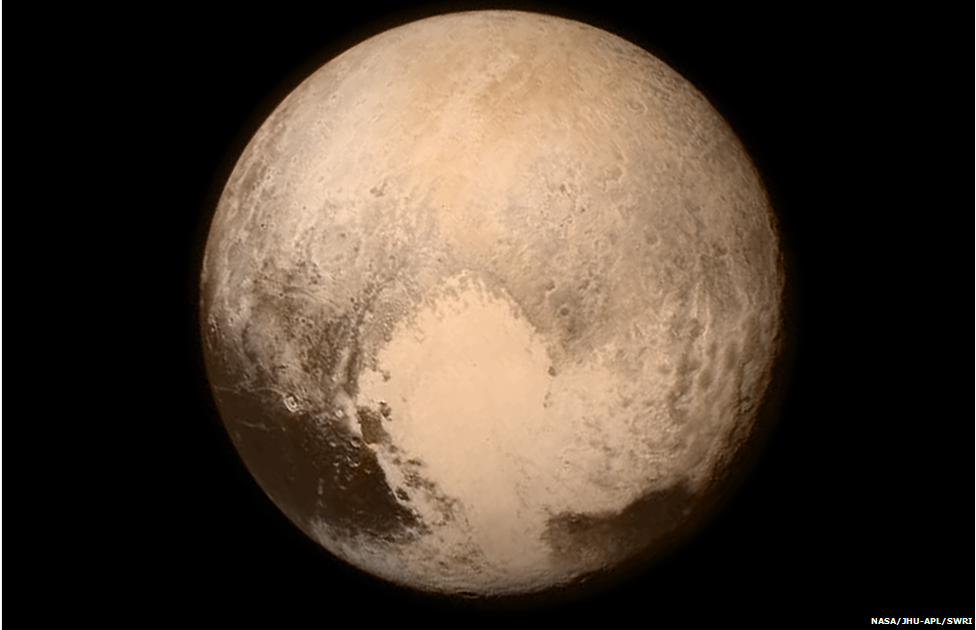
Look at it! JUST FREAKIN' LOOK AT IT!

Look at it! JUST FREAKIN’ LOOK AT IT!

As New Horizons proves once again that humans are freakin’ amazing and brilliant when we work together and use our mighty brains to solve interesting problems (and as we all pore over the photos that have been released and get excited about the ones yet to come – what are those impact crater-looking things? Is that a volcanic mare, or a mighty series of dunes? Why is it a different colour to its main moon Charon? EVERYTHING IS THE MOST INTERESTING THING!), the debate over whether Pluto should or shouldn’t be a “planet” has threatened to flare up again.

You might recall that in 2006 it was determined that Pluto was no longer considered to be a planet on par with the now-limited-to-eight main bodies in the solar system.

The reason for this was that bodies had been discovered further out in the Kuiper Belt (the region of icy rubble beyond the orbit of Neptune) and it was thought likely by the International Astronomical Union that as our technology improved we’d be discovering more and more of these things – which turned out to be correct.

So we had a choice: either redefine planet to mean the eight things that we currently define them as – thereby eliminating Pluto – or adding dozens of new planets to the list every year. Thanks to technological advances like the Hubble telescope and better computer algorithms for automatically recognising odd orbits in data, there are almost 400 candidate planet-like objects out in the Kuiper Belt. That’s a lot of things for eight year olds to memorise.

Thus in 2006 the IAU settled on a definition for planet that had three main tenets: if you’re big enough to be round, you’re going around the sun and there’s no other significantly-sized body in your orbit, then guess what? You’re a planet.

Pluto ticks most of the boxes, but the definitions are a little bit arbitrary.

The first two seem OK. A planet has to be orbiting the Sun so moons and satellites, which orbit planets that orbit the Sun, therefore don’t count.

That might seem obvious, but it’s worth remembering that almost all of the moons around the planets are a) basically spheres and b) in two cases, larger than one of the planets (the Jupiter moon Ganymede and the Saturnian moon Titan are both larger than Mercury – although they’re not as dense and therefore don’t have as much mass. See? It’s complicated).

Second, the thing has to be big enough to undergo “hydrostatic equilibrium” under it’s own mass. Thus lumpy little asteroids don’t count (and technically the planets aren’t actually spherical – they’re slightly flattened at the poles and wider at the equator because of their rotation, making them “oblate spheroids”, but that’s nit-picking).

Thirdly – and this where Pluto fell down – they have to have “cleared their orbit” of other bodies. This is the most arbitrary distinction of all, but the argument goes like this: you need to be big enough that your gravity has either thrown everything else out of your orbit or it’s been attracted to you and collected it.

Pluto doesn’t count for two reasons. One, that there are other things in its wide orbit (“plutininos”) that its gravity is not powerful enough to disturb. It also, technically, crosses the orbit of Neptune although the two are in what’s called an orbital resonance, so they’re never in the same place at the same time – otherwise the utterly enormous Neptune would easily slingshot Pluto out of the Solar System entirely.

It’s been pointed out that most of the planets absolutely have significant things in their orbits – aside from Neptune, which hasn’t cleared Pluto from its orbit, the Earth, Mars and Jupiter all have bodies of asteroids scattered in our orbits and no-one appears to be arguing we’re not planets as a result. But this was a definition invented mainly to find a way to exclude Pluto and get things to a manageable system.

But to be honest, “planets” is a problematic term in any case.

It’s derived from the the Greek term for “wanderer” and were so-called because the the five close enough to be visible to humans before the invention of the telescope (Mercury, Venus, Mars, Jupiter and Saturn) were points of light that moved through the skies when viewed from Earth, unlike the apparently fixed stars.

The fact we invented the word to describe little points of light in the sky is why we have the same name for “little solid lumps of rock”, like Venus, as we do for “massively giant seething balls of gas”, like Jupiter.

You could make a very solid argument to call those types of things by different, less Earth-centric names, the way we do for other non-planet things in our solar system like asteroids and comets, but we’re kinda stuck with it.

So I rather like that we have a different name for the amazing objects out beyond the orbit of the last of the gas (well ice) giants.

Out past Neptune is Pluto and the other “trans-Neptunian” objects, including a load of amazing dwarf planets: in orbits wider than Pluto’s, there are Eris, Makemake, Haumea, Sedna, Orcus, Salacia and others that haven’t officially been given names yet.

They’re all smaller than our Moon and they’re – probably, we think – made of ice, mainly water and methane. In fact, they appear to be more like giant comets than they are like the four inner planets.

And that’s why, dumb as the term might be, I like that there’s a different word for them. “Dwarf planet” is a stupid name (and it’s not what astronomers use, incidentally: they call them “planetoids’) but it at least acknowledges that they’re different things*, an exciting group of different bodies about which we barely know anything and which we’re the first generation to be able to discover.

And if the fact that you’ve heard of Pluto means that you might be interested to learn more about Eris or Makemake, that’s a great thing in itself (their orbits are nuts, by the way). And hell, it makes more sense to celebrate Pluto as Amazing Gateway to the Glories of the Kuiper Belt rather than The Shitty Last Planet After The Proper Ones.

And in any case, New Horizons has made the distinction kinda moot. Look at that photo at the top of the page again: Pluto is now a place.

It’s a real, tangible world ten years and billions of kilometres away, with its own characteristics and mysteries and beauty. However we define it, we’re the first humans in history to see its face – and that’s the thing that fills me with hope and joy for our species.

Dammit, we’re an amazing species when we want to be.

Cheers,

APS

* Of course, then you have the question of why tumbling balls of frozen methane are labelled the same as a solid sphere of rock in a diffuse belt of other rocks, since the major asteroid Ceres has also been deemed a dwarf planet, but that’s a different rant. Dammit, what’s wrong with just declaring Ceres The Mighty King Of The Asteroid Belt rather than confusing the issue by making people think it’s like Pluto, only closer?

How To Address The Stupid Arguments Against Marriage Equality: a cut out and keep guide

Most of these sorts of discussions end very productively.

Most of these sorts of discussions end very productively.

Dear The Internet,

One of the nice things about having a column is that I get to rant about stuff I think should be ranted about, but sometimes I just want to rant EVEN MORE. And the biggest thing that’s baffling me at the moment is the pointless and downright silly arguments against same-sex marriage being implemented in Australia.

There is a strong, sensible argument against marriage equality, and it goes like this: “I don’t like gay people and I don’t want them being happy.”

It’s intellectually honest, it cuts right to the heart of the matter, and it doesn’t mess around pretending that the speaker cares about civil rights or human happiness. Unfortunately it also makes clear how little someone’s personal ick-feelings should contribute to crafting legislation in a modern democracy.

Thus campaigners prefer to go with elaborate justifications about how they’re actually worried about protecting marriage and and preserving the sanctity of marriage, and respecting the values of tradition, because they’re largely meaningless statements that are therefore hard to argue against, and also because bigots get very sad when people call them bigots.

And then there are more practical arguments which I’m sick of slapping down regularly on Facebook, so here’s my list of responses to the current crop of stupid, stupid arguments against marriage equality. This way I can just send a link and get on with my day.

Stupid Argument The First: This is so very very important a change that we should have a Referendum, like in Ireland! You know, to see what The People think!

No, we shouldn’t. More specifically, not only do we not need to, but it would achieve literally nothing.

In Australia a Referendum can only be called in order to change something in the Constitution, and since the definition of marriage isn’t in the Constitution – it’s in the Marriage Act, a piece of Federal law – it can only be changed through federal legislation. You know, like the Howard Government did in 2004. Remember that referendum about defining marriage as being between “a man and a woman”? No you don’t, because there wasn’t one.

The other option that’s been thrown around is a plebiscite, which is like a Referendum but a) not necessarily a compulsory vote, and b) not about something in the Constitution. That’s what we had about changing the flag, for example.

The problem with that is that the Constitution prevents the Federal Parliament from limiting its own power to create laws, so a plebiscite would have to be non-binding BY DEFINITION in order to work. What’s more, it would leave any change potentially open to a High Court challenge regardless of the result.

So either way, it would require Parliament to change the law independently of any such citizen vote – exactly as it does at the moment without one.

Stupid Argument The Second: B-b-but kids deserve a mother AND a father!

Leaving aside that this is a meaningless statement – kids grow up without one or both parents all the time – this has absolutely nothing to do with the Marriage Act. Parental rights are determined by a suite of laws mainly created by the states, and if you’re worried that kids might be legally raised by same-sex couples if the definition of marriage was changed then you might want to sit down: it’s already legal.

More specifically: same sex couples can adopt in WA, the ACT, Tasmania and NSW, and a same-sex partner of a parent can legally adopt their partner’s child in WA, the ACT and NSW. In the other states a partner can apply for a Parenting Order, which is much the same thing but doesn’t remove an existing parent’s rights as per an adoption.

So if that’s the big concern then a) the Marriage Act is the wrong target and b) that battle’s already been lost.

Stupid Argument The Third: OK, let’s make all partnerships “civil unions” and define “marriage” exclusively as a church-sanctioned thing!

Well, for a start this would require altering the Marriage Act to change the definition of marriage – which is the exact thing that people are so gosh-darn worried about doing, right?

But also, this would require stripping marriage from heterosexual couples who didn’t have a religious ceremony, which is the vast majority of Australians. Removing it from a majority of straight people seems a bit at odds with arguing that it’s a precious special magical thing for man and woman to share.

Then there’s the fact that an increasing number of churches are totally fine with marriage equality, which will kinda dilute this terribly important distinction, surely?

But the main thing is that it would never get public support necessary for it to be passed. People like being married, which is why people want to be married. That’s the entire reason this discussion is happening in the first place.

But what if, on the other hand, churches want to decide that the only marriages that “count” are ones done in their own faith tradition? Well, in a lot of cases, they… um, already do.

Stupid Argument The Fourth: B-b-but the law will make religious me do gay things I don’t like!

A popular side argument to the above is “b-b-but these changes will force me, a religious minister, to marry gay people against my faith! My religious freedom will be curtailed! CURTAILED!”

Except that churches won’t be forced to marry gay people they don’t want to marry. You know why? Because they already don’t marry straight people they don’t want to marry.

Most churches at least require the couple to be part of their faith, and usually also their congregation. There are already arbitrary hoops through which people have to jump to get access to any religion’s clubhouse.

Also, let’s be realistic here: no sane person is going to decide to hold a celebration of partnership and commitment, surrounded by all the people they love most, that’s officiated by someone who openly despises them. Weddings are typically delightfully upbeat affairs, and that would kinda bring down the mood.

Stupid Argument The Fifth: But tradition! TRADITION!

Even assuming that tradition was a strong prima facie reason to not change something (which, as the replacement of the traditional practice of bloodletting with the modern alternative of antibiotics has demonstrated, it is not), which tradition are you talking about, exactly?

The first recorded marriages in history predate the major religions by a few thousand years, were in Egypt (and quite probably in other places that didn’t conveniently have a written language that was preserved in stone) and were designed as a way for families to record lineage of offspring in order to maintain family ownership of property. They were a romantic people, them ancient Egyptians.

And while there are plenty of examples of same-sex, polygamous and weird sibling-heavy arrangements in different epochs and locations, we’re perfectly cool with ignoring those traditions when they don’t suit what we like, or what our society will accept.

That’s because marriage is like so many other things that humans care about, like the unalterable word of God in religious texts, or the Star Wars prequels: people inevitably pick the bits they think are good and quietly ignore those they don’t, whether it’s prohibitions on wearing mixed-fabric clothes or the existence of Jar Jar Binks.

So inevitably it comes down to people being very selective about the traditions they want to follow, which is why we currently have the very modern idea of two people voluntarily entering into a partnership for reasons predominantly connected with love. It’s hard to see why the genitals of these people would make a fundamental difference to that broad concept.

Stupid Argument The Sixth: But changing the definition of marriage will inevitably lead to polygamy/child-marriage/dogs and cats having adorable tiny weddings!

Since those are all entirely different questions, no it won’t.

The argument behind this otherwise-silly statement presumably goes something like this: “if we alter the definition of marriage in the Marriage Act now, what’s to stop us altering the definition of marriage in the Marriage Act again later?”

And the answer is “nothing, beyond having the motivation to actually do it”.

More specifically, we can change any word of any Act at any time, provided that Parliament has the numbers to do so and can be arsed spending the time doing it. That’s literally the entire point of Parliament. They make and change and repeal laws, loads of them, all the time (for an average of 50-ish days per year, at least).

If your fear is that Parliament might alter words in a law sometime now or in the future, then perhaps representative democracy isn’t the right political system for you.

Stupid Argument The Seventh: Oh, why is this still a thing? I mean, who cares? There are more important things to worry about!

Exactly. It’s a pointless and tedious argument, and it’s going to keep going until we finally have marriage equality because more people want it than don’t. If it gets brought up in Parliament and defeated, that’s not going to make it go away (hey, it didn’t last time). It’s going to keep going and going and going and going until it happens.

You want the endless debates to finish? Pressure for same sex marriage to pass so we can all get on with our lives.

Yours ever,

APS
Reactivating the (other) zombie blog

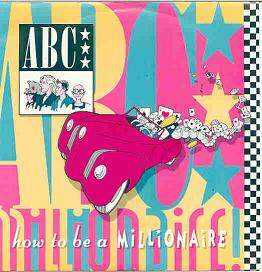
It’s hard to believe, but I have a blog that I update even less often than this one: Songs You Should Rediscover Today Because They Are Awesome. And for the first time in months – a bit over seven of them, in fact – I actually wrote something there about ABC’s ‘(How To Be A) Millionaire’, for reasons that may not immediately be obvious.

Those reasons are as follows:

Mmmm, 80s graphic design…

Mmmm, 80s graphic design…

First up, a deeply annoying bout of insomnia. It’s 6.30am right now, I started writing the piece an hour ago and I’m sure I’m going to crash at my desk before midday. I’m confident that coffee will, as ever, fix things.

Another was that when I write my nationally-tolerated View from the Street column (here’s yesterday’s one about Eddie McGuire, incidentally) I generally pull out an LP to play while I’m plonking the text into the Fairfax system and yesterday’s choice was the song’s frustratingly patchy parent album, which subsequently became my aforementioned insomnia’s maddening soundtrack at about 4.30am.

And thirdly, because I’m neck-deep in writing m’first book at the moment (what? Stressed? Moi? Oh heavens no!) and my brain is desperately looking for things to distract it from, for example, the grim recent history of Australia’s treatment of asylum seekers. Spoiler: turns out it’s not great.

So let’s assume there’ll probably be some others going up there in the next few weeks, while deadlines loom and I start obsessively going back over my record collection in a desperate attempt at preserving my own sanity.

Hope you’re doing good. You’re looking well. That hairstyle really suits you.

Yours ever,

APS

…And we’re back in the saddle

View from the Street returns, refreshed and a little annoyed that things weren’t all sorted out in its absence

Dear The Internet,

It’s been a frantic 2015 thus far, what with trying to write a book (still on track, by the way: hence my increasing caffeine intake over the last few months) and also – just to add more organisational stress to the process – getting married just over a week ago. Which was, by the way, the best.

Seriously, best day. How goddamn good to we look? Amazing. Photo by Anna Kucera

Seriously, best day. How goddamn good do we look? Amazing. Photo by Anna Kucera

Anyway, I’m almost certainly going to write something philosophical-slash-sentimental on the subject in the immediate future (after all, how often do you get to put a large proportion of the people you adore in the one room? There’s pretty much no other excuse to force people to travel from interstate and overseas to frock up and drink and dine with a bunch of folks whose only connection is that they have people they care about in common).

However, in the meantime please rest assured that I’m alive, a good deal more cash-free, still grinning like a loon and back to pumping out View from the Street for the good people of the Sydney Morning Herald Sun-Thurs after a little mini-honeymoon break. Which was also a freakin’ joy, by the way.

To that end, here’s Monday’s column in case you missed it and were thinking “I wonder if anyone in the Australian federal government has said anything sexist and/or xenophobic of late?” Spoiler: yep!

Anyway, there’s a book to be written and right now I’m going to go make some coffee for my wife. And yes, the novelty of using that word has not worn off.

Yours ever,

APS