Unknown's avatar

About Tyrannicon

Made of fire and caffeine from the very depths of nature's space - of the future.

Here’s the Thing: How the Abbott government learned to argue with their allies

Originally published at TheVine, 3 April 2015

Or, how to lose friends and influence people against you

296519_Sulking_schoolgirl_circa__001_591w

One of the things that gets said with reasonable regularity in response to the government’s less-than-stellar track record with regards passing legislation is that the Opposition keep blocking things in the Senate.

It’s a standard argument used by right-leaning commentators, government MPs and angry people on my Facebook page: the reason that all this Medicare co-pay stuff, or the changes to Centrelink eligibility, or the deregulation of universities and most of the budget (still unpassed and coming up to its first smash anniversary!) gets blocked in the upper house is because of Labor’s intransigence. Why oh why do they hate Australia so much?

Here’s the thing, though: Labor don’t block anything. They don’t have the numbers. Indeed, Labor and the Greens together don’t have the numbers.

Here’s the breakdown of the 76 members of the Senate:

The Coalition has 33 senators. Labor has 25. The Greens have 10. And then there are those eight other guys.

Passage of legislation through the Senate rests on a simple majority, thus the balance of power is held by eight independent-slash-microparty senators. It is they whom control the passage of legislation, and it is they whom the government needs to convince.

More specifically, assuming that Labor and the Greens are blocking a piece of proposed legislation, they need to get six crossbench votes (assuming that all Senators are present).

So the problem must be that the crossbench are all radical lefties with a strong anti-conservative bent, right?

Um, about that.

The eight senators who determine the passage of legislation are three sorta-kinda libertarians, two puppets of a mining billionaire, a conservative Christian, a former soldier turned outspoken Islamophobe, and a dude who likes cars.

Number of radical lefties? Zero. Number of people who would, on the face of it, disagree with the sorts of policies beloved of a Coalition government? Zero.

And that’s more or less what the government thought when they got into power, which is why there was so little transition between the steady-as-she-goes promises the Coalition made ahead of the election and the right-let’s-start-cutting-everything-promises-be-damned approach they took after taking office.

Now, admittedly it’s not quite as cut and dried as the above description suggests.

Clive Palmer sank millions into creating Palmer United for the express purpose of getting his vengeance on the Liberal National Party to whom he had been such a heavy donor, and the idea was always to become a potent enough force to hurt Queensland premier Campbell Newman and, to a lesser extent, Tony Abbott.

After the election it appeared Palmer controlled four of the eight crossbenchers. The party had three senators: WA mining executive Dio Wang, former QLD rugby league star Glenn Lazarus, and Tasmanian ex-soldier Jacqui Lambie, plus the Motoring Enthusiasts Party’s Victorian senator Ricky Muir, a former timber worker who had reportedly agreed to vote with the party as a bloc.

Before too long that alliance had splintered: Muir voted independently of PUP, and Lambie and Palmer engaged in an escalating war of crazy (largely over whether PUP would support Lambie’s planned legislation banning Muslim headscarves) until she abruptly left the party.

This would, under normal circumstances, look like a godsend to the government. Sure, PUP was largely attempting to balance populist policies with opposing government measures, which led to seemingly contradictory policies like scrapping the carbon not-actually-a tax but supporting the renewable energy target. But how hard could it be for the government to negotiate with a pair of confused newcomers with right-leaning personal politics?

Instead they started a war with Lambie over defence pay, and Muir (who had struggled to find a job for the nine months between being elected and taking office) was put offside by the government’s draconian employment benefits policies.

And they’re not alone. You want to cut government spending, Coalition? That should be a slam dunk for small-government advocates like David Leyonhjelm and the Motoring Enthusiasts Party. Yet neither have proved easy to convince.

A government that openly opposes marriage equality and supports socially conservative policies in place of existing programmes (who can forget former Social Services minister Kevin Andrews cutting funding for groups that provide emergency women’s shelters, but providing discount marriage counselling coupons?) should find plenty of common cause with Family First’s Bob Day and former DLP senator and avowedly religious anti-abortion campaigner John Madigan. But again, it’s been an uphill battle.

And with the Prime Minister loudly declaiming Muslims as not being appropriately anti-terrorism, Lambie should be a strong ally – yet she’s consistently voted against every piece of legislation the government proposes, and pledged to continue to do so until there’s a pay rise for defence personnel.

The only senator one would generally predict to be opposed to the government would be centrist SA independent Nick Xenophon, but he’s voted in support of several surprising bills – including granting sweeping new powers to the Immigration Minister. The man’s a wild card.

In other words, any difficulty the government has in negotiation is not down to the opposition of the Greens and Labor, but their own ineptitude at negotiating with people who are, after all, heartland Coalition voters.

Put simple: the Abbott Government have done the seemingly impossible: they’ve found a way to argue with people that agree with them.

Which raises the tantalising question: would a new and more responsive leader make those negotiations easier?

After all, it’s impossible to see how it could make things worse…
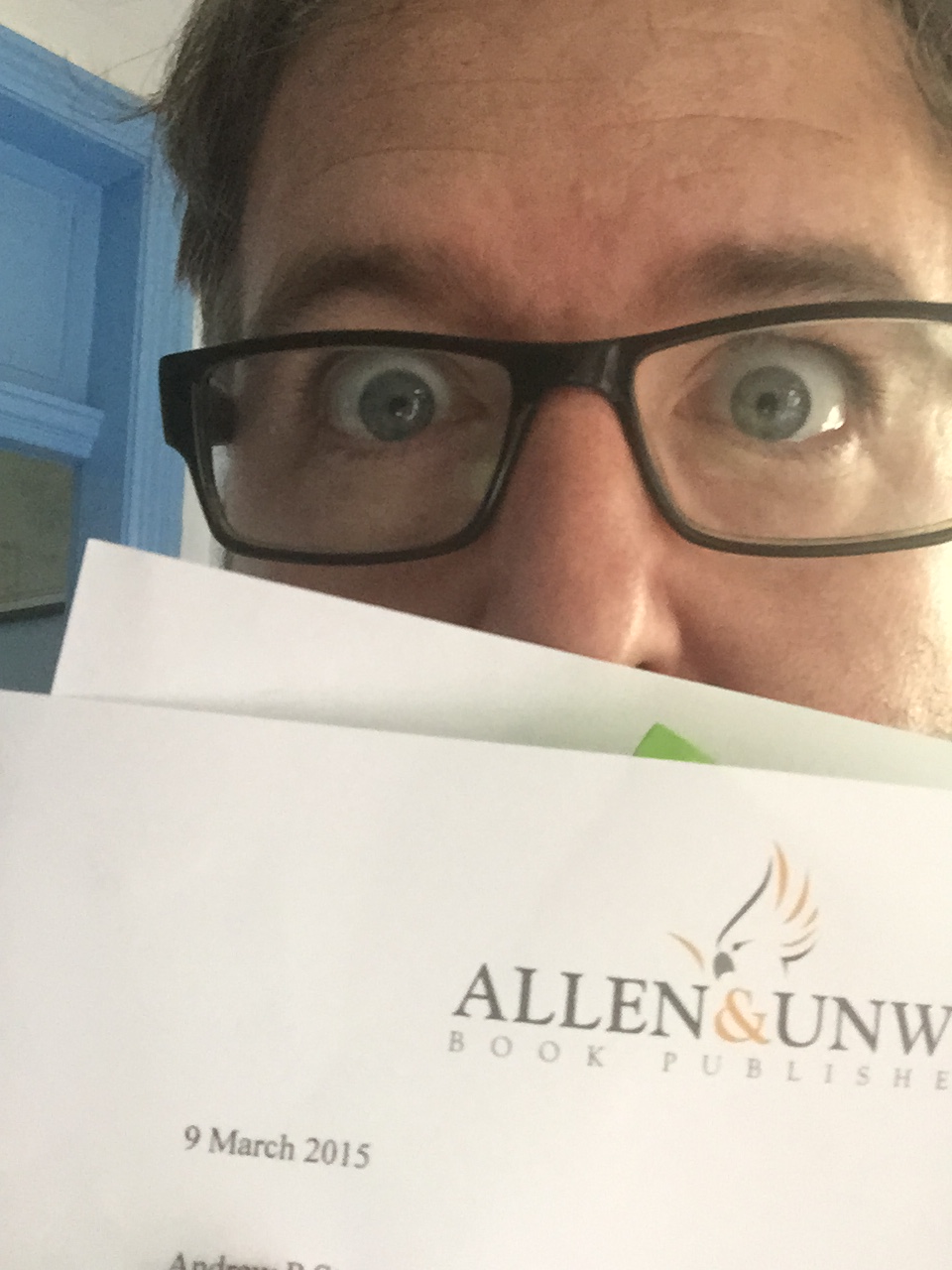
So, you like buying books by people named me, right?

Dear The Internet,

Since I’m now holding the contract in my trembling hands, I can now officially announce that I HAVE A CONTRACT FOR MY FIRST BOOK. Yes, I know: I also think I should have written one by now.

I’ll be frantically putting words together to make something for Allen & Unwin to publish later this year, on the happy subject of the Abbott Epoch of Australian governance. And it’s great of the Coalition to give me so much material to choose from too, especially the last couple of months.

Look, I'm as surprised as you are.

Look, I’m as surprised as you are.

I’m overjoyed, excited as hell, and absolutely terrified.

If you are wondering “but APS, what sort of timbre will your book most likely take?”, then here’s the last week or so of View from the Street, lovingly ranted for you at the Sydney Morning Herald and the rest of the Fairfax Digital family.

This does mean that I’ll be winding back a lot of my writing for the next little while, aside from VftS, but rest assured I’ll still be word-jockeying with desperate haste.

And now, back to frantic note-compiling and Scrivener tutorials.

Yours ever,

APS

“Politics isn’t a popularity contest”

Some statements are uttered so often that you no longer realise what utter bullshit they are

Fun fact: this is the exact note that Andrew Peacock used in his unsuccessful spill motion against PM Malcolm Fraser in 1981

Fun fact: this is the exact note that Andrew Peacock used in his unsuccessful spill motion against PM Malcolm Fraser in 1981

It’s a cliché that politicians lie, but one of the most hilarious things that is said by pollies from all sides of the political spectrum (though most often when they’re in power) is one that is taken as some sort of noble truth when it is in fact, if you take a second to think about it, utter steaming nonsense.

And it is this: “politics isn’t a popularity contest”.

Usually it’s said to a reporter by a beleaguered politician trying to enact a programme or policy that is getting hammered with criticism in the public sphere – selling off public land or closing a hospital or some such thing – and is meant to evoke their high-minded commitment to principle over the ill-informed howls of the unwashed rabble.

“This is good policy,” this politician will declare, before sighing to indicate the terrible weight of responsibility under which they ceaselessly labour and adding “and politics isn’t a popularity contest. We have to do what’s right.”

And oh, what a condescending load of arse that statement is.

Why? Because government is completely and utterly a popularity contest.

That’s not to say that public opinion is sometimes important or electorally valuable: all politics is 100% a popularity contest all of the time. It is literally the entire job – and those who forget this fact are rewarded by not being in power for very long.

It doesn’t even matter what kind of government we’re talking about. Unpopular leaders get replaced by their parties. Unpopular parties get voted out in democratic elections. Unpopular dictators get overthrown in coups, most often by someone more popular with the military. Unpopular monarchs get assassinated by their scheming uncles and ambitious advisors.

It’s even true in popular science fiction: the Sith allegedly spent millennia carefully plotting and scheming to get Emperor Palpatine in control of the galaxy, and he blew it in a couple of decades by being enough of a jerk to make a decent size slab of the population violently oppose him. If he’d built more space hospitals and fewer Death Stars then the Rebel Alliance would never have been motivated enough to start painting up their X-Wings in matching livery.

(And seriously: Death Star? Did the Empire not even consider test marketing that name? You need to call it something people can get behind – after all, that’s why Australia’s anti-asylum seeker programme “Operation Sovereign Borders” isn’t called “Hunt Down And Scare Off The Boats Filled With Brown People”.)

Popularity is the entire job of being a successful politician. “Popular” comes from the same Latin root as “population”: popularis, meaning “by, of, or for the people”. To govern the populace, you must be of the populace: in other words, popular.

That’s not to say that governments don’t have to do things that people don’t like in the best long-term interests of the nation. In those cases they either have to convincingly argue the case so that people understand what’s at stake, or they have to plough through, take their punches and hope that they have enough goodwill in reserve to get them over the rough patch.

But any politician that says “it’s not a popularity contest” isn’t showing they’re above the fray: they’re telling you to shut up.

And that’s a great way to make yourself unpopular.

Here’s the Thing: So, with whom will the Liberal party replace Abbott?

Originally published at TheVine, 12 February 2015

Who’ll be leading the country in the next three-to-six months? Let’s find out!

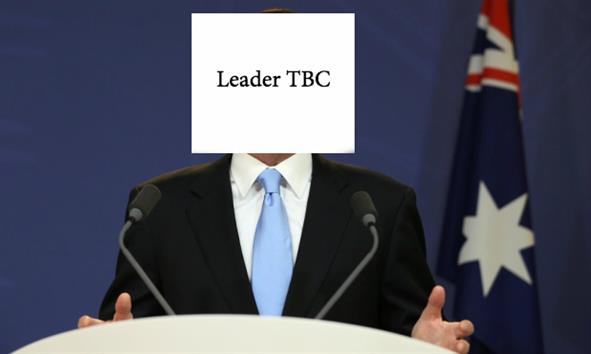
294554_Insert_Leader_Here_591w

In 1969 the management theory book The Peter Principle was published, written by Lawrence J. Peter (hence the name) and Raymond Hull, whose central premise was a simple and powerful one: in every profession, people rise to their level of incompetence.

The idea goes like this: if you’re good at your job, sooner or later you’ll be promoted. However, the skills that make you a kick-arse rotisserie chicken cook may not guarantee that you’re great at managing your coworkers. If you’re a lousy shift manager, that’s where you’ll remain – but if you’re a good one, you’ll be promoted further up the management ladder. And again, good people skills may not extend to running inventory and keeping track of suppliers, so if you’re bad at that, that’s where you’ll stay. If you’re good, you get promoted again – until you find a role in which you’re genuinely incompetent.

It’s an elegant idea, and one that answers the question “why the hell is this person in this position?” with the satisfyingly correct-feeling answer “because they suck.”

Like virtually every prime minister Tony Abbott has been Peter Principled into the big chair because he was good at his previous gig – in Abbott’s case, opposition leader.

However the skills to effectively tear down a flailing government are not the same as the skills required to lead and unite a nation (we assume, since there’s no evidence he’s tried that yet).

However, it’s an all-but-foregone conclusion that Abbott will not lead the Coalition to the next election. The leadership spill was a wound that won’t heal, and history suggests that sitting leaders who survive leadership spills do not remain in power once the electorate see them as vulnerable.

Failed challenges upon sitting PMs only happened rarely. In the Liberal camp Billy McMahon challenged John Gorton in 1971 and Andrew Peacock challenged Malcolm Fraser a decade later – and the Liberals took a beating at the subsequent elections: Gorton had the wisdom to realise he was doomed and retired, thereby letting McMahon have his arse handed to him by Gough Whitlam, and the stumbling Fraser government was wiped out by Bob Hawke’s historic majority in 1983.

For Labor the situation is even more ominous: both Keating and Rudd challenged their sitting PMs (Hawke and Gillard, respectively) and failed, before trying again and… well, you know how those worked out.

Abbott’s situation is even more dire because there was no actual challenger – yet two-fifths of the party voted for Someone To Be Named Later over the sitting PM. And that’s the only reason he’s still leading today: the party want him gone, but there’s no obvious alternative ready to step up 2 the federal streets.

But here’s the thing: someone is going to be moulded into leadership material by the terrified Liberal Party, and soon. So who is it going to be?

There are all sorts of concerns that parties consider when they choose their leader and deputy. They need to be from different bits of the country – so Labor lovin’ lefities can abandon hope of an Anthony Albanese/Tanya Plibersek double act, for example, since they’re both inner-city Sydney MPs.

Also, they need to balance the factions. For example: Labor leader Bill Shorten is Right and from Victoria, his Sydney-based deputy Plibersek is from the Left.

Also, somewhat predictably, the leader is almost always from either Victoria (10 PMs) or New South Wales (12). Bigger states mean bigger name recognition.

Let’s meet the alternatives:

MALCOLM TURNBULL

Centre, NSW

Best known for: your shitty internet connection, being the leader most non-Coalition voters say they’d vote for.

Pros: He’s actually smart and charming, seems like a human being with human thoughts and feelings. He’s also a millionaire, thereby ticking the “privileged white man” box that the Liberals need to feel comfortable with. And he’s not tied so closely to Abbott as to make it seem like a betrayal if he knifed him.

Cons: He’s been leader before. That’s not a huge impediment, as John Howard demonstrated, but during his tenure he made a lot of enemies in the party. While he’s a stone-cold economic rationalist he does have some socially progressive views – he’s pro-marriage equality, for example – which concern the conservative faithful.

He also takes climate change seriously, but you can absolutely rule out any hope of him leaping into the fight for renewable energy if he got into the big chair: his support for a bipartisan emissions trading scheme was what got him rolled as leader by Abbott.

Challenge potential: Easy frontrunner, which is why everyone’s just assuming it at this stage. And he should be confident: going by the spill result, 60% of the backbench basically voted for his shadow.

JULIE BISHOP

Centre, WA

Best known for: our not being at war with our closest international neighbour, looking exasperated next to the PM, snarking on Peta Credlin.

Pros: Like Turnbull, she’s articulate, smart and actually smiles every so often. She’s also been an effective Foreign Minister, successfully negotiating the tricky oh-yeah-we’re-spying-on-Indonesia thing with great success, despite having both the PM and the Immigration Minister actively working against her. She’s also the obvious favourite of the Murdoch Press, which historically has meant victory.

Cons: She was a lousy Education Minister under Howard, and an equally lousy Shadow Treasurer while in opposition. She’s also a female deputy of the party who has been vocal about her support for the PM, which would make a sudden challenge look distinctly Julia Gillard-esque – a deep problem for a party that used the Rudd/Gillard challenges as a stick to beat Labor with ahead of the 2013 election.

Challenge potential: Probably not any time soon, but she’d be a strong candidate to lead the party in opposition – which, realistically, is what she’s holding out for.

JOE HOCKEY

Centre, NSW

Best known for: saying poor people don’t drive, not understanding percentages, releasing a budget that has yet to pass, having a nice cigar after passing said budget, being the subject of 2014’s most unintentionally hilarious biography.

Pros: Politics is almost completely about economics – or at least has been since Paul Keating made it so, and no-one’s yet challenged this implausible-sounding assertion – and the guy’s the Treasurer! He knows about economics, right?

Cons: By any measure he’s been a terrible treasurer. He’s presided over rising unemployment, shrinking GDP, a diminishing dollar, an increase in debt (which he has made the biggest focus of his role by bitching about it in opposition) and – as mentioned above – releasing an unpassable budget. Also, he keeps saying incredibly ill-considered things in public.

He’s more socially progressive than you’d probably realise, but right now the party realises that he’s a huge liability – realistically the only hope that Abbott has is to cut Hockey loose. A Hockey challenge would be over before it began – at least, that’s what happened last time.

Challenge potential: Only if he wanted to go out in blaze of glory.

SCOTT MORRISON

Right, NSW

Best known for: stopping the boats, stopping the reporting on the boats, stopping the scrutiny over what happens to the people on the boats, stopping the adherence to our international treaties regarding human rights (especially with regards people on boats).

Pros: Has genuine success in his last portfolio as Immigration Minister, although that success was entirely down to stifling reporting regarding his portfolio. Also, stopping the boats is a pretty dubious goal to start with, the billion-dollar-a-year cost and the whole abuse-of-human-rights things notwithstanding. He’s deeply beloved by the Right and seen as an effective minister. Perhaps… perhaps a little too effective…

Cons: The public see him – not incorrectly – as a hardline religious zealot with few traditionally Christian characteristics regarding things like “charity” or “humility”. His behaviour as Immigration Minister and now as Social Services Minister also – again, not incorrectly – suggests he genuinely doesn’t care about people. He’s also very closely tied to Abbott, which would make a leadership challenge look like a betrayal.

Also, when he smiles he looks like he’s going to bite someone.

Challenge potential: Slim to nil. Despite this, Abbott knows he’s a potential threat within the party – hence the move to Social Services, one of the most up-fuckable portfolios

CHRISTOPHER PYNE

Centre?, SA

Best known for: the most hittable smile in Federal politics, calling people cunts, looking like a private boarding school prefect that’s just masturbated into the mashed potato.

Pros: Um…

Cons: Literally everything. Even if he wasn’t associated with his attempts to gut higher education funding at the moment, he’s a man that exudes a powerful anti-charisma that makes whatever he says seem sly and venal. It’s not helped that this is also largely the qualities of what he says, though.

Challenge potential: He’s tied himself so tightly to Abbott that it’s doubtful that he’ll even keep his portfolio when Abbott goes – and since he’s managed to turn one of the safest Liberal seats in South Australia into a projected loss for the party, no-one’s going to risk letting him give it a try anyway.

CORY BERNARDI

Right, SA

Best known for: the whole comparing-homosexuals-to-bestiality-enthusiasts thing over which he got moved to the backbench, lying about abortion statistics, the fact that he never blinks

Pros: It would be genuinely hilarious.

Cons: We’d need to burn the country down.

Happy new y… um, February 1st!

Dear the Internet,

Yep, my updates are maintaining the usual stately pace in 2015. Sorry. It’s been busy.

Very, very busy.

Very, very busy.

Well, actually, the first few weeks of the year were wonderfully unbusy and I had some time to do things like “not write for a bit”, but then View from the Street started up again, coinciding wonderfully with the Prime Minister deciding to look at the lessons of 2014 and go “yeah, nah.”

So there has been a lot – A LOT – to write about. You can read all of the things here, if you want to feel a little bit worse about Australian politics.

Other than that I’ve written about Better Call Saul, what date we should change Australia Day to, since we’re eventually going to do that anyway, reviewed Abbie Cornish – aka MC Dusk – opening for Nas, and some other musicy writing stuff which should be out shortly in both print and on the prestigious internet.

Also, I’m trying to think of a decent project for this site to make it something other than a series of occasional apologies and links to things, although that would be somewhat predicated on my having time to actually do it. I miss doing Song You Should Rediscover Today Because It Is Awesome (which is even less regularly updated than this, and lives here), so maybe something like that just to remind me that it’s not all being disappointed with politics.

But now I’m off to do an interview. Let’s talk soon.

Yours ever,

APS

Seven tips for recreating a big NYE night out in the comfort of your own home

First published in Time Out Sydney, December 26, 2014

Dear the Internet,

New Years Eve is, let’s not beat around the bush, a nightmare. There’s nothing more grim than enforced fun and NYE is basically a giant public office party: everyone knows they’re meant to be enjoying themselves and dammit, they’re ready to drink until everything gets fun. Except it never gets fun enough.*

You can also have NYE in your cubicle at work, if you want.

And you can also have NYE in your cubicle at work, if you want – it’s just that simple!

Thus the temptation is to stay in and sidestep the whole sorry mess – but you don’t want to miss out on the NYE Experience, surely? So here are some handy tips on how to recreate the excitement of hitting the CBD on new years without leaving your postcode.

*Please note: this doesn’t apply if your office is Time Out, since we have awesome parties. We had our annual picnic at the beach last week and seriously, it was the best day. And don’t even ask about the Bar Awards, since your head will explode with jealousy.

1. Convince yourself that this has to be the most fun night you’ve ever had and that NYE is basically a portent for how the rest of the year is going to pan out. Continually monitor your own level of enjoyment: are you having enough fun? How about now? Or now?

2. Withdraw $380 from the nearest ATM. Throw it in the air. Walk away.

3. Go into your kitchen counter. Stand there for 40 minutes attempting to order a drink. Then get five beers out of the fridge, justifying it by saying you want to skip the ridiculous queue. Realise how inconvenient they are to carry. Drink them all in the space of ten minutes. Repeat until you’ve logged onto your ex’s Facebook.

4. Go to the smallest, hottest room of your house and play godawful music at ear-splitting volume. Periodically complain about how shit the music is.

5. Pretend you’re at the Sydney Harbour fireworks by driving about three kilometres from home, backing your car into the tightest space you can find and walking back home bitching about how there’s nowhere to park in this goddamn town. Then watch the TV simulcast with somebody sitting in front of the screen.

6. Stand outside your house and attempt to hail a cab. After two hours, give up and go back inside for 10 minutes. Repeat.

7. Before going to sleep on the lawn, throw your keys, wallet, phone and at least one of your shoes onto your neighbours’ roof.

And hey, just have fun!

Yours ever,

APS

The Magical Xmas Gift of André Rieu

Is there a term for a balding mullet? A bullet? A ballet? I bet there's a German word for it.

Is there a term for a balding mullet? A bullet? A ballet? I bet the Germans have a word for it.

Because it’s Xmas there is one artist that people are going to hear more than anyone else as they go about their day-to-day lives: André Rieu, the multi-platinum-selling superstar Dutch violinist and morning suit enthusiast whose compact discs are available in many of Australia’s most exclusive post offices.

And it’s easy to make fun of his sterile take on classical and popular music, but it’s important to recognise that he’s provided a valuable service to the global community.

See, I came to music very early. I was raised on the British Invasion artists that my parents adored – the Beatles, the Kinks, the Who, the Stones – with a little bit of Motown and Hendrix thrown in. I joined my school orchestra in year three, playing viola, and was thus exposed to the power and the majesty of the great classical composers.

By the time I hit double digits I was spending my pocket money almost exclusively on records, beginning an obsession with bands like the Smiths, the Cure, Models, New Order and Pet Shop Boys that has endured, with some fluctuations, to this day.

All of the most important moments of my life have been coloured by the music I was listening to at the time. Music has been my constant companion, my inspiration, my crutch and my salvation.

So André Rieu’s great lesson to us is this: music can also be cheesy and awful.

It’s so easy to forget that music can be vapid bullshit when you’re surrounded by almost a century of recorded works which are now more accessible than ever before; where you can dive into the works of Os Mutantes one moment and Gram Parsons the next, explore Bollywood superstar Asha Bhosle and then rummage through Chuck Berry’s greatest hits, devour this year’s glorious New Pornographers album and follow it with some of Yma Sumac’s inexplicable vocalisations.

With every culture on Earth creating its own astonishing music, and then cross-pollinating one another to create everything from amazing Thai beat combos to stuttering German hip-hop, one could easily spend a life exploring these endlessly fertile rivers without ever realising that music can also be stale, passionless and insipid, poisoning the soul and crushing the human spirit.

Rieu takes some of the most beautiful pieces ever created by humankind, from the liquid melodies of Handel to the sophisticated harmonic pop of ABBA, and renders them lifeless and dry, as if to say “all art is a pointless distraction from the ultimate embrace of the grave, mortals. Ever been lifted by the jubilant power of the Hallelujah Chorus, or moved by the desperation at the heart of ‘The Winner Takes It All’? Well, allow me to fix that for you.”

Like Michael Bay with cinema, EL James with literature or everyone at Rockstar Games that worked on Grand Theft Auto V, Rieu is a reminder of the power of an artist to drain all the wit, joy, skill and beauty from an art form, challenging others to ignore the limitless possibilities of the human imagination and focus instead on making as leaden and inept a work as possible.

And that, friends, is an Xmas gift that keeps on giving.

A little Xmas song for the Australian front bench

…because something’s got to distract from our terrifying new immigration laws.

"You know what's great? Satire!"

“You know what’s great? Satire!”

The speculation about whether Hockey would be knifed in favour of Turnbull set my muse alight on wings of poetical gossamer, to the tune of ‘Let It Snow’. You know, because nothing – NOTHING – is a bigger agent of change than a parodic song with political intent!

Well, the media sharks are circling,
And the PR blitz ain’t workling,
And someone’s going to have to go –
Let it Joe! Let it Joe! Let it Joe!

The front bench is kerfuffled,
And it’s time that it got reshuffled
And we can’t dump the leader, so…
Let it Joe! Let it Joe! Let it Joe!

The economy’s in the can
And the budget is yet to pass
So maybe we should get a man
Who’s perhaps slightly less of an arse;

For the economy is a-tankin’,
And these mines need investment bankin’,
And the press prefer Turnbull, so:
Let it Joe! Let it Joe! Let it Joe!

And while we’re here, you may enjoy catching up with the last few weeks of my View from the Street columns at the Sydney Morning Herald. There’s one way to find out!

"And furthermore, Madam Speaker, if the Senate will not capitulate to my demands on immigration reform, I shall not hesitate to activate the Omega Device." View from the Street: Refugee children magically become bargaining chips

Here’s the Thing: So, Chinese companies now have more rights than you do

Originally published at The Vine, 26 November 2014

Who’d have thought a deal rushed through in secret might have a few worrying conditions attached?

290737_China_Australia_FTA_591w

Trade has been enormously beneficial to the world –  at least, so long as you prefer it to war.

Throughout history the nations that traded the most became hubs of knowledge – Rome in the first century BC, Alexandria in the 6th century, Amsterdam in the 17th century, London in the 18th, Shanghai in the 19th, New York today – and there is a direct correlation between the amount of trade between nations and the global decline in armed conflict.

It’s not hard to see why. The Age of Empires was an expensive one; conquering new territory was a pricey process, and hanging onto it was even more costly.

Conversely, a trade partner offers plenty of material benefit and zero outlay on armed invasions or open-ended occupations.

Russia’s just learning that with regards its newly annexed resource-poor and people-that-expect-services-rich Crimea, and (as discussed before) ISIL are starting to face a similar challenge in Syria and Iraq.

And there’s a lot to be said for trade if, like me, you’d rather that people didn’t just straight up kill each other. It can be exploitative, sure, but it typically doesn’t end with quite so many corpses.

And the global marketplace has more countries talking and less countries bombing each other than ever before. Hell, we just had countries that have ongoing diplomatic hostilities – Japan and China, China and India, Russia and everyone else – sit down together in Brisbane the other week and have a civilised chat about trade. For all of the limitations of the G20 visit, this is actually significant progress.

Here’s the thing, though: there comes a point where free trade stops being liberating, and starts becoming dangerous and constrictive. And the newly-announced China-Australia Free Trade Agreement is a clear example of this.

As Trade Minister Andrew Robb admitted to SBS, the China-Australia Free Trade Agreement was rushed though at “five minutes to midnight” to make the photo-op that was the G20, and that there was no time to do actual modelling on how it would actually work.

Despite this, it was very swiftly hailed as a triumph of negotiation by the government, who then got very, very quiet about it.

The reasons for this were not hard to fathom as details of the deal emerged and it became clear that getting access to the massive Chinese market would require certain… shall we say, “flexibilities” on the part of Australia, and on the workings of our democracy.

But we’ll come to that. First up, let’s look at the economics.

The Nationals – the team sitting at the kids table of the Coalition dinner party – had the unfortunate job of admitting that local food prices would rise as a direct result of the deal.

Deputy PM and Nationals leader Barnaby Joyce conceded that “Another market means competition, and competition means that [Australian primary industries are] going to get a better price. And we’ve got to do that – we’ve been asking the supermarkets for so long… well now they’ve got somewhere else to go.”

Hear that, Middle Australia? The same rise in your household bills that was the apparent justification for killing the carbon tax is now being hailed as a triumph for the FTA. Huzzah!

Never mind the local price rises: there’s also very little evidence that Australia will actually make anything out of the deal at all.

The “$18 billion increase in by 2015” trade number that was bandied about at the time sounded impressive, but it transpires that it’s not quite as true as you might have assumed. Especially since, as Robb said, there was no actual modelling done.

More specifically, the $18 billion increase was based on modelling done in 2005, for a very different China-Australia deal that was assumed to have been signed that year. That number was the amount estimated for the subsequent ten year period – in other words, meaningless with regards the deal that was actually signed.

What are some of the differences? Well, this model assumed that tariffs would be immediately dropped (they weren’t: the majority of reductions are being phased out rather than eliminated) and that it would include sugar and rice (which it doesn’t) – and, more importantly, that prices for thermal coal and iron ore hadn’t plummeted dramatically since 2005, which they have.

Even if the modelling wasn’t worthless, going by its own conclusions the deal was pretty lousy, giving Australia’s GDP an annual increase per year of a pitiful 0.37%, according to an analysis by the Guardian’s Greg Jericho, which is approximately nothing. Hilariously, or distressingly, the same feasibility study also calculates growth at an even more pathetic 0.04%, or “a rounding error”.

And, as Jericho also points out, our 2005 FTA with the US – spruiked at the time as a deficit-killer by then-PM John Howard – increased our trade deficit by half, to its current level of $15.4 billion.

Adorably, Howard also predicted that the deal would open up the US market for Australian automotive manufacturing, with “a very big, potential, exciting market for Holden.” So, how’d that turn out?

However, the biggest problem is “a controversial clause in the deal that will allow Chinese corporations to sue the Australian government if the government introduces laws or regulations that damage the profits (or ‘future profits’) of Chinese companies,” as Fairfax’s Gareth Hutchens put it.

This clause will also be part of the upcoming Trans-Pacific Partnership Agreement and will retroactively be inserted into our current FTA with Japan.

And not that I wish to sound like a broken record on this subject, but… well, I bitched and moaned about the “investor-state dispute settlement provisions” as laid out in our FTA with South Korea in 10 Things back in December 2013.

You see, these clauses

… allow foreign corporations to sue our government if said government does something that the company deems threatening to its profits. For example, if you were a tobacco giant based in a country with which Australia had an ISDS, you could theoretically sue Australia for introducing plain packaging laws on cigarettes on the grounds that it was anti-competitive.

If that sounds like an alarmist stretch, be advised that this is exactly what has already happened.

See, the Hong Kong subsidiary of Philip Morris launched a High Court challenge against the Australian government over plain packaging, citing the 1993 Agreement between the Government of Australia and the Government of Hong Kong for the Promotion and Protection of Investments. They lost the High Court case in August 2012, mainly on the grounds that they knew the laws were coming in when they bought out the Australian subsidiary’s operations, but immediately launched another case which is still before an international trade tribunal.

And if you’re wondering “hey, isn’t Philip Morris is a US company? Why is the Hong Kong arm suing us?” the answers are “yes” and “because the US and Australia don’t have a trade deal with an ISDS, but we and Hong Kong do”, respectively.

A similar case is currently before the courts in Canada where US energy company Lone Pine Resources is suing under the North American Free Trade Agreement after Quebec called a moratorium on fracking ahead of environmental studies about the likely impacts.

That’s what the China-Australia FTA already has in place, that’s what we’re about to get with the US and Japan. These clauses enshrine in law the principle that your health and wellbeing is secondary to the commercial interests of overseas companies.

Laws restricting emissions in Australia could be deemed anti-competitive and struck down. Ditto labelling on foods, or restrictions on harmful products. Want to ban a defective crib that puts babies at risk? You’d better hope it’s not from a country with whom we’ve signed an FTA.

And this isn’t crazed lefty fearmongering: as of the signing of this deal next year, Chinese mining companies will have more rights than you do when it comes to the level of pollution in your air and water.

Does this scare you? It should.

And there’s more to come.

One of those wildly overdue update things, with bonus explainer about governments

A special post for newcomers who are itching to tell me I’m a lefty jerk

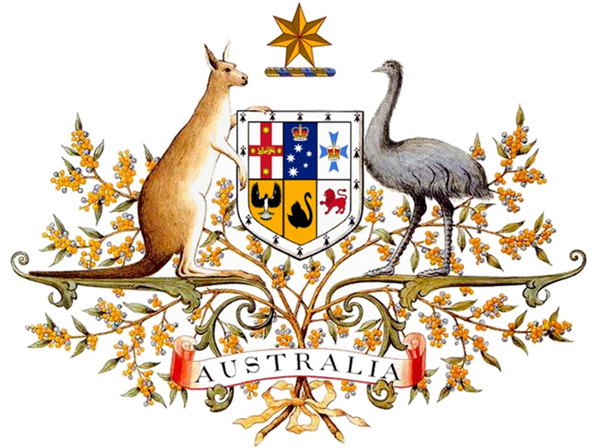
Our national coat of arms, featuring two emblematic creatures that work brilliantly in a curry.

Our national coat of arms, featuring two emblematic creatures that work brilliantly in a curry.

Hello, internet. You’re looking well.

I’m not going to lie to you, friend: it’s been a busy old time.

That’s mainly been because of my five-day-a-week online column at the Sydney Morning Herald, which is called View from the Street – yes, I’m the titular Street (here’s today’s column, if you’re interested) – and which is most likely the reason you came here. That, or a very creepily specific porn search.

Something that’s coming up increasingly often because of said column is that I have an anti-Coalition agenda. And that’s not really true: I disagree vehemently with most of the things they’re attempting to do, but that’s because I think they’re pursuing lousy policy rather than because I have a deep-seated loathing of conservatism.

See, conservatives can have good ideas. Progressives are occasionally wrong. The way to establish the quality of a political party’s idea, in my opinion, is to ask the question: does this specific policy contribute to human wellbeing and societal stability?

If the answer is yes, then congratulations: that’s a good bit of policy you have there! If not, then it’s bad policy and should be, at the very least, taken back to the shop for some serious remodelling, possibly with a mallet.

And most of the time it’s pretty straightforward to answer those questions, especially if you bother to ask them in the first place.

So, in order to better understand where I’m coming from, here’s an excerpt from my Here’s The Thing column at TheVine entitled “Governments: Why Do We Even?” explaining that governments are around for a reason, and it’s a pretty great one.

Humans are kinda rubbish at survival on our own. We’re naked and weak and we don’t run especially fast and we don’t have tough shells or huge claws or any of those other things that more robust species have.

One major problem is our big stupid heads, which we need because of our enormous brains. We walk upright in part because that’s the best way to distribute that hefty weight, and walking upright necessitates having a narrow pelvis. Combine narrow pelvises and gigantic skulls and you need to give birth to offspring that are basically fetuses that need a hell of a lot of looking after just to survive. In just about every other species a newborn can fend for itself more or less from birth: human babies are notoriously bad at it.

What we do have – the thing that we’re really, really good at – is working together. Our big brains are great at working out what other people are likely to be thinking, and therefore changing our behaviour accordingly so we can work better together. Lots of animals do that, of course, but we’re amazingly good at it.

About ten thousand years ago we started settling down in places rather than moving around, building permanent settlements and inventing stuff like agriculture as a way to feed a growing mass of people.

Societies started to grow, and the societies where people lived better lives became (understandably) more popular with people than those where things were terrible. Stability brought prosperity, and prosperity bought neat stuff like art and science and culture. Turns out that when humans aren’t living hand to mouth, they have time to think about stuff like “y’know, this shovel could be better designed” and “hey, what do you reckon stars are?”

And that’s also where the idea of laws, and for that matter religion, comes from: a series of rules under which society is stable, and in which the constituents live better lives than they otherwise could do on their own. As this became more codified we ended up with things like governments.

And stability doesn’t sound sexy – anarchy gets a cool symbol and everything – but it’s where where big-brained, small-teethed humans turned things to their advantage. We didn’t have to fight, and we had time to think. And that changed everything.

Once you conclude that governments are in place to maintain the stability that leads to prosperity, it becomes a hell of a lot easier to tell whether something is a great idea or a terrible one. Is society made better by a particular policy? Does it hurt people, or does it help people?

If that’s your criteria, you don’t need to speculate on whether a leader is a good and moral person or not, or whether a party is sticking to their guns or betraying their base or any of those other pointless questions. You can ask “is this specific piece of legislation or policy actually helpful to people?”

That’s the important question, and the challenge for governments is to answer that question with “yes, and here’s why”, rather than angrily insist that their opinion is more valid than evidence.

Yours ever,

APS

PS:

Speaking of Here’s the Thing, I wrote one today on why we should be protesting the cuts to the ABC. Yes, I really do write a lot.  That’s why I look so tired all the time.