Unknown's avatar

About Tyrannicon

Made of fire and caffeine from the very depths of nature's space - of the future.

Here’s the Thing: Surveillance Laws Don’t Reduce The T-T-T-Terrorisms

Originally published at TheVine, 5 November 2014. 

Are our new anti-terror laws necessary in order to protect us? Not if the US experience is any guide.

289529_Australia_location_map_recolored_591w

Making loud noises about domestic security is a sure-fire way for a government to look all strong and resolute and leadery, especially if they’re – just for the sake of argument – still attempting to pass a budget six months down the track.

However, here’s a complete list of all the domestic Islamic terror plots successfully carried out on Australian soil prior to the new security laws being passed: zero.

The closest we’ve come is the Bali bombings which, while tragic, were not in Australia. And even if you travel to less secure locales on this exciting planet of ours, your risk of being affected by terrorist activity remains much where it’s been for the last two decades: utterly infinitesimal.

We’re terrible at noticing that, though.

That people are just straight up lousy at calculating risk can be gleaned by the fact people are terrified of Ebola – a disease which is not in this country and is zero risk to anyone not actively working among the stricken – and yet so blasé about measles that they’re not immunising their own damn children against a genuine, potentially deadly and entirely preventable disease.

But measles isn’t sexy, and Ebola is. And saying “honestly, you’re fine” isn’t nearly as exciting as “you’re right, you’re under perpetual threat: that’s why we need to know your phone and internet records.”

Indeed, in the briefing notes given to the government by the federal police included the bold claim that “metadata is central to virtually every counter-terrorism, organised crime, counter-espionage and cyber security investigation.”

Here’s the thing, though: it’s absolutely not.

To demonstrate this is the case, let’s have a little look-see at the experience in the United States.

After the World Trade Centre attacks in 2001 the Bush administration introduced the Patriot Act which, hilariously, is a backronym (the full title is “Uniting and Strengthening America by Providing Appropriate Tools Required to Intercept and Obstruct Terrorism Act of 2001″.)

Aside from have the most ridiculous title imaginable, said Act gave the government sweeping powers over American citizens and non-citizens alike, including the warrantless gathering of metadata.

The argument at the time is that it was absolutely necessary in order to track and capture terrorists on US soil. And it’s still going: collection of said data is thought to be the work of the gigantic Intelligence Community Comprehensive National Cybersecurity Initiative Data Center, a massive data facility built last year at Camp Williams, about 40km out of Salt Lake City, Utah.

In fact, those powers have since been expanded: there was a ruling last year by the US Foreign Intelligence Surveillance Court – yep, that’s a thing you didn’t know existed – which removed the need to actually show that information collected or analysed needed to have anything to do with an investigation.

FISC Judge Clair Eagan wrote that the National Security Agency “requires neither ‘specific and articulable facts’ nor does it require that the information be material. Rather it merely requires a statement of facts showing that there are reasonable grounds to believe that the records sought are relevant to the investigation.”

So, how many terrorists has unfettered access to thirteen years of metadata caught?

The answer may surprise you: it’s one. And calling that person a “terrorist” is perhaps a little misleading.

That person is one Basaaly Moalin, a cab driver from San Diego. Access to his phone records allowed the FBI to successfully prosecute him for donating a total of $US8,500 in several transactions during 2007 and 2008 to al-Shabaab, an al-Qaeda affiliated group in Somalia.

This information comes from the New America Foundation, a non-partisan non-profit public policy organisation based in Washington DC. Their analysis of the records of 225 people charged with terrorism-related offences revealed that “that traditional investigative methods, such as the use of informants, tips from local communities, and targeted intelligence operations, provided the initial impetus for investigations in the majority of cases, while the contribution of NSA’s bulk surveillance programs to these cases was minimal.”

When they say “minimal”, they mean minimal: phone records were part of 1.8 per cent of investigations of US citizens, and 4.8 per cent of non-US persons.

Even in the Moalin case the phone data didn’t immediately cause the authorities to leap into action: the FBI waited two months between linking him to a number in Somalia and beginning their investigation. And while sending finances to a Somalian terror group is illegal – and also terrible, let’s be clear – it’s not exactly 9/11 Part Two.

Indeed, the authors conclude that “Surveillance of American phone metadata has had no discernible impact on preventing acts of terrorism and only the most marginal of impacts on preventing terrorist-related activity, such as fundraising for a terrorist group”.

Possibly not worth a staggeringly expensive decade-plus international programme of surveillance and analysis, in other words.

In Australia we’ve had some big showy events to remind us that we’re all at risk all the time.

And if you dispute the use of “showy”, please note that typically police don’t invite the media to join them when they’re sending 800 police to raid a number of properties in Sydney and Queensland, at least not unless they’re confident that there’s not going to be any sort of risk involved. And the result? Two arrests, and the confiscation of a plastic ceremonial sword, which was hung on a wall.

Also, just to be clear: the people yelling about ISIL on the internet and firing pellet guns at Muslim clerics are not actually, y’know, in ISIL.

They’re angry dickbags who feel powerless and are ready to take it out on whoever gets in their way – not helped by the sharp rise in Islamophobia that’s happened in recent times. If you’re already feeling pushed around, having politicians declare you’re un-Australian and people spit on your mum when she’s on a bus is hardly going to calm you down.

Thus if you’re a proud Australian with a Facebook avatar reading “STRAYA: LOVE IT OR LEAVE IT” then congratulations, dipshit: you’re doing a great job endangering the nation you ostensibly care about. You’re the problem, not the folks in the mosque.

The international experience has suggested that the best – actually, the only – defence against angry loners is the people around those angry loners. Those are the parents and siblings and colleagues who can either take said loner aside and say “listen, this isn’t like you” or, if they think the situation is escalating beyond their ability to help, contact the authorities.

Concerned citizens informing the police is pretty much how every plot has ever been uncovered, in Australia and everywhere else. So can you see a potential issue with sidelining one entire section of the community off as being “other”?

So, if you genuinely want Australia to be safe and you’re not just using “security” as a replacement for “I fear brown people”, then you have a duty to make everyone feel that Australia is home and therefore that everyone has a stake in helping protect the place.

You also get the bonus of, y’know, not being a racist dickbag. That’s pretty great for everyone too.

I say this a lot – A LOT – but it’s a sentiment that apparently needs repeating:

There is no Us-And-Them. There’s not even any Them. There is only Us.

My Obligatory Comment on Gamergate…

GIRLS DON'T LET ME SEE THEIR… um, I mean ETHICS! ETHICS IN GAMES JOURNALISM!

Gamergate, yesterday

…is that it’s all about hating and fearing women, obviously. Everyone realises that, right?

I mean, even if the complaints against feminist games blogger Anita Sarkeesian and independent game developer Zoe Quinn weren’t the demented rantings of crazy people (see this comprehensive debunking of the “case” against Quinn, for example) then the retaliation against them is still entirely unwarranted.

Similarly, if the problem is “ethics in games journalism”, then making threats to rape and kill women who are entirely unconnected with the mainstream gaming media seems to be, to be generous, a very roundabout way of achieving positive change.

And lots of smart people have made these points elsewhere, like my colleague Jenny Noyes at Daily Life, but I’d just like to weigh in on one of the great unchallenged assumptions in all this.

It’s about the idea that companies use their ad spend to force positive reviews from media: an accusation which gets thrown around as being unquestionably true.

As someone who’s worked for a bunch of mags and sites and done quite a lot of games writing and editing in my time, and let me make clear: in my experience, it’s bullshit.

Yes, big companies that advertise get their stuff reviewed more often than those that do not, absolutely, because editors are not utter fools.

If you’ve got 20 reviews running and (for example) Ubisoft are spending with you, you’re going to put whatever Ubi thing you have available in those 20, obviously. And if something’s being advertised heavily and you’ve got a scathing review you might quietly bury that piece – but that’s less about angering the ad gods than not looking like an idiot.

However, the thing that people don’t perhaps appreciate is that games companies generally don’t buy ads or coordinate reviews. Outside companies do it.

Reviews are generally coordinated by PR companies who want to show their client – the games company that’s contracted them – that they got x amount of coverage and are therefore doing a great job that deserves ongoing employment.

Ads, meanwhile, are bought by media agencies who literally don’t give two shits about whether a publication has raved or canned a title: they care about the price they can gouge from the publication, the readership of said publication, and the demographics of said readership.

In the case of PRs, they generally don’t especially care if the reviews are negative, as long as they run and they can therefore invoice the company and cite their successful placement.

In the case of the ad agencies, they don’t care about reviews at all: if the publication doesn’t have enough readers, they’re not getting any ads. That’s why editors hate agencies: there’s no way to sweet talk them with “…but we love this title, our five-star review is even quoted on the case!” They honestly couldn’t give less of a fuck.

The company cares about reviews, but they don’t have direct contact with the publications themselves and thus aren’t in a position to pull ad spend over a specific review (and the spend is controlled by the media agency in any case). And only a moron would open themselves up to a “games publisher threatens editor over review” headline. That’d be golden clickbait for any games site.

There are a few companies that do everything in house – Rockstar traditionally have, for example – but ironically it tends to be the smaller, less influential devs that handle this annoying fiddly stuff themselves. If you’re EA or Sony or Nintendo, you’re going to outsource your PR and your ad buying because, aside from anything else, it’s a hell of a lot cheaper and easier.

In short, the big companies don’t bother with pay-for-play because it’s just not worth the effort, and the small ones don’t bother because they have virtually nothing to bargain with.

To recap: Gamergate has zero to do with games, ethics, or journalism. It’s entirely about terrified men slapping down women who dare to speak in public. And, thankfully, it seems to have had the  effect of making women call bullshit on it, in vast numbers.

That’s what gives me hope about this sort of highly-visible misogyny: it seems like the last frantic thrashing of a dying thing. It’s like lancing a boil: it’s messy and disgusting at first, but that’s also what gets the poison out.

Here’s the Thing: Governments – why do we even?

First published at TheVine 7 October 2014

Andrew P Street spits venom and drops mad truth-bombs about the stuff that irks him

288072_Gov_Australian_Coat_of_Arms1_591w

We live in dogmatic times in which the people running the country are sticking to their agendas in direct contradiction of the expert advice they’ve been given about what reality is up to.

The examples are many, from Education Minister Christopher Pyne blithely refuting OECD data showing that higher education bestows more benefit to society than the individual, or Environment Minister Greg Hunt insisting that Wikipedia told him climate change is not linked to bushfires despite being told exactly that by the Bureau of Meteorology, to pretty much everything that treasurer Diamond Joe Hockey says regarding the financial crisis which only he can see.

And people have their own political beliefs, of course, and sometimes it can be difficult to work out whether or not a policy is objectively a great idea or a terrible one. One day Pyne could make a genuinely great suggestion regarding education policy – sure, it doesn’t sound likely, as recent experience has demonstrated – but would you necessarily recognise if it happened?

Here’s the thing: it’s not actually that hard to spot good policy. All you have to do is remember why we have governments in the first place: to maintain stability in society.

See, humans are kinda rubbish at survival on our own. We’re naked and weak and we don’t run especially fast and we don’t have tough shells or huge claws or any of those other things that more robust species have.

One major problem is our big stupid heads, which we need because of our enormous brains. We walk upright in part because that’s the best way to distribute that hefty weight, and walking upright necessitates having a narrow pelvis. Combine narrow pelvises and gigantic skulls and you need to give birth to offspring that are basically fetuses that need a hell of a lot of looking after just to survive. In just about every other species a newborn can fend for itself more or less from birth: human babies are notoriously bad at it.

What we do have – the thing that we’re really, really good at – is working together. Our big brains are great at working out what other people are likely to be thinking, and therefore changing our behaviour accordingly so we can work better together. Lots of animals do that, of course, but we’re amazingly good at it.

About ten thousand years ago we started settling down in places rather than moving around, building permanent settlements and inventing stuff like agriculture as a way to feed a growing mass of people.

Societies started to grow, and the societies where people lived better lives became (understandably) more popular with people than those where things were terrible. Stability brought prosperity, and prosperity bought neat stuff like art and science and culture. Turns out that when humans aren’t living hand to mouth, they have time to think about stuff like “y’know, this shovel could be better designed” and “hey, what do you reckon stars are?”

And that’s also where the idea of laws, and for that matter religion, comes from: a series of rules under which society is stable, and in which the constituents live better lives than they otherwise could do on their own. As this became more codified we ended up with things like governments.

And stability doesn’t sound sexy – anarchy gets a cool symbol and everything – but it’s where where big-brained, small-teethed humans turned things to their advantage. We didn’t have to fight, and we had time to think. And that changed everything.

Governments historically have been about law and order, but something happened that made them large players in economics: the invention of tax.

While taxes have existed for centuries – the Romans had them, and tithes to landowners were a fixture of the feudal system – income taxes were initially created specifically to fund wars – Britain brought theirs in to fund their efforts in the French Revolutionary War in 1799, the US introduced them for the Civil War in 1861, and Australia’s first Federal income tax began in 1915 to help support our efforts in WWI.

But once in place, and without expensive killing to fund, governments rapidly worked out that they could very easily be used to pay for stuff that would be very, very useful for society – especially things that were not immediately profitable.

See, private companies exist to make profits. That’s the entire point of them.

In fact, companies that don’t make the most profits they can possibly make run the risk of having shareholders taking legal action against their boards. That’s why companies that make billions in profits every year, like banks, still follow announcements of record profits with news that they’re laying off thousands of workers. It’s not because they need to in order to stay profitable, it’s because they’re basically obliged to cut any costs that they can cut in order to maximise return for shareholders.

The problem is that there are expensive things like defence, education and health that make societies more stable and therefore provide the circumstances for individual prosperity, but are not themselves immediate moneyspinners. Private enterprise does these things somewhere between “not especially well” and “very, very badly”.

And thus these have largely been the things that governments have paid for over the last century: the stuff that is hard to profit from, but that society is the better for having.

Once you conclude that governments are in place to maintain the stability that leads to prosperity, it becomes a hell of a lot easier to tell whether something is a great idea or a terrible one. Is society made better by a particular policy? Does it hurt people, or does it help people?

If that’s your criteria, you don’t need to speculate on whether a leader is a good and moral person or not, or whether a party is sticking to their guns or betraying their base or any of those other pointless questions. You can ask “is this specific piece of legislation or policy actually helpful to people?”

That’s the important question, and the challenge for governments is to answer that question with “yes, and here’s why”, rather than angrily insist that their opinion is more valid than evidence.

(Of course, it helps if you don’t demonise income tax by pretending that it’s an onerous personal burden rather than the incredible collective bargain that it is, and then have the two major political parties in Australia spend two decades competing to cut it back the most, thereby reducing it to the point where they struggle to maintain those necessary services to keep society stable, but that’s a rant for another time…)


Here’s The Thing: a new ranty column by me

This entire area could really be a lot better, peace-wise

This entire area could really be a lot better, peace-wise

Look, I rant a lot and often I need more space to rant than any sane person would let me do in a column.

So now I’m taking things that I want to screed about in a larger format to Here’s The Thing, my new column at TheVine, and brilliantly named by my better half who pointed out how freakin’ often I use that phrase.

The first one is all about my nonthusiasm regarding our involvement in Iraq. SPOILER: it’s a terrible idea.

Hope you like it.

Yours ever,

APS

The first week of the new column, and other things

Let’s have a little look-see at the way the week’s panned out.

Morning, the Internet.

I may work from home these days, but at least I'm maintaining the stringent strata-based filing system that has historically made my desks so easily identifiable.

Former officemates will be relieved to note that I’m maintaining the stringent strata-based filing system that has historically made my desks so easily identifiable. Also, that Eagulls CD is really good.

Well, it’s been a week of the column at the Sydney Morning Herald’s site (and the affiliated national mastheads, about which I’m terribly excited). It’s a heck of a feeling to be writing for the SMH – and gotta say, it’s been very, very, VERY nice not having to get up at 5am to do so.

If you’ve missed said columns thus far, they went a little bit like this:

Sunday 21: Yeah, racist attacks may not be the best anti-terror strategy

Monday 22: John Howard was right, says John Howard

Tuesday 23: Will Palmer United become Palmer Untied?

Wednesday 24: Scott Morrison’s Holiday in Cambodia

Thursday 25: ASIO to hide your freedom so the baddies can’t get it

and all my stuff is gathered here.

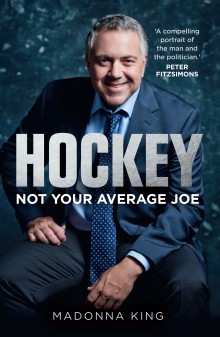
Also, it was very sad to hear that the King’s Tribune has ceased publishing: another source of independent journalism vanished. The last thing I wrote for them was my review of treasurer Joe Hockey’s biography Not Your Average Joe. Spoiler: it was not positive.

There’s quite a few SMH pieces out there, but also I had a chat with Jimmy Barnes for the Guardian, and reviewed the excellent new Sounds Like Sunset album for Mess+Noise.

In other news, there’s a fair whack of my stuff in the next issue of Time Out Sydney, including a feature about the surprising rise of country music in the city, and this week I’ve been pumping out stories for Voyeur and Australian Guitar that will be printed in the coming months and make it look like I’m sort of writin’ machine.

Next week will have the launch of my new column at TheVine, entitled Here’s The Thing, which will be like my longer 10 Things entries where I’d get completely sidetracked and go deep into the history of an issue. I’ll no doubt be making a song and dance about it on Twitter and stuff, so feel free to follow me if you don’t already.

Speaking of which: I won’t bother you too often because I treat Twitter less like a communication medium and more like a bus window out of which I occasionally yell. So if you’re planning on having a Twitter war with me, apologies in advance: I generally don’t bother. It’s a great medium for insults but terrible for proper discussions, so maybe screed it up on my Facebook instead.

And now, back to the word mines. See you at the SMH on Sunday evening, friends.

Yours ever,

APS

There’s a new column in the world’s column-place!

And the nation celebrates the launch of another opinion screed by some dude in Sydney!

And the nation celebrates the launch of another opinion screed by some dude in Sydney!

As promised, last night was the triumphant launch of my new column What’s Going On at the Sydney Morning Herald, the column that one commentator accurately described as “like 10 Things”. And yes, that’s pretty much it.

Just to quote a bit of m’self doing what experts call “managing expectations”, or possible “setting agendas”, here’s how I’ve described it assuming you can’t be bothered clicking on a nice easy internet link:

In order that there be no confusion about what follows, I should make clear that I’m a big fan of the notion that we humans are pretty great, that we do all our best stuff when we work together, and that we could all stand to be a bit kinder to one another. I realise that these are not notions that are at all popular with our current government, or indeed with the internet as a whole. And to a large extent it’s not a philosophy that’s getting a lot of traction around the world, from Nigeria to Ukraine to a decent slab of the Middle East.

However, I still reckon that “how’s about we stop acting like dicks for a bit and see how that shakes out?” is an idea worth trying, since the alternative seems not to be getting great results.

But anyway, this is my column. Thanks for popping by. You’re looking well. That haircut suits you.

And it does. It really, really does.

Anyway, that’s the first one. There’ll be many, many more. Presumably.


10 Things: and that’s a wrap

Yes, after two years of early starts today I’ve handballed 10 Things at the Vine over to my pal Amy Gray, who is amazing and will do amazing things with it. And I’m missing it already because it’s been a huge part of my life. Between that and leaving Time Out it’s been a real time of… um, leaving objectively good writing gigs. That should have been a better metaphor, really.

However, the reason that I’ve stopped doing 10 Things is a good one – I’m still writing for TheVine (and for Time Out, for that matter), but I’m delighted to announced that my new column What’s Going On will debut on SUNDAY 21 SEPTEMBER on smh.com.au. Yes, my weird lefty ranty take on current events is hitting the mainstream!

(I believe it’ll also be on all the other Fairfax sites and mobile devices, incidentally.)

I am incredibly excited about this, not least because it involves not getting at up 5am. Oh, that is going to be BLISS.

In the meantime, here’s the last little while of 10 Things. Remember the good times, friends…

Joe Hockey: Not Your Average Joe review

Originally published at the King’s Tribune, September 2014

What made Diamond Joe change from jovial, avuncular goof into angry, sulky goof? We asked Andrew P Street to read the Joe Hockey biography so that you wouldn’t have to. You’re welcome.

Biographers, more or less by necessity, have to fall in love in with their subject. Writing a book is a nightmarishly long ordeal and Stockholm Syndrome must kick in at some point out of sheer self-preservation.

So it’s no surprise that Not Your Average Joe’s author Madonna King is clearly a fan of Joe Hockey and goes that extra mile to spin his successes as mighty victories and his failures as being the fault of lesser men (and always men) who either lack Hockey’s peerless vision or are jealous of his incandescent talents.

The problem is that it all comes across like that friend who talks about the awesome new guy they’re dating, but every single story makes the guy sound like a bullying jerk.

You can just imagine King dishing over a coffee: “Joe was criticised by feminist groups on campus during his election campaign for the University of Sydney Student’s Representative Council, so when he became President he immediately closed the Women’s Room! Isn’t that hilarious?”

“Um, actually, that sounds like he was, at best, being dickishly ungracious in victory and at worst putting women at risk by eliminating a safe space for them on campus,” you would hesitantly reply.

“Oh, you just have to get to know him!” King would presumably respond with a dismissive guffaw. “It’s just his sense of humour! Like when he claimed he’d signed up 80 new members to the local branch of the Liberal Party on the North Shore and now admits that he mainly just added the names of dead people to the register and was never caught – I mean, what a caution!

These days this cover is the entire dictionary entry for "hubris".

These days this cover is the entire dictionary entry for “hubris”.

Not Your Average Joe is not just a collection of heart-warming tales of revenge-misogyny and voter fraud; it’s also the story of how one deeply insecure young man grew up to become the most deeply entitled and self-aggrandising treasurer Australia has ever known – which, in a field that includes such avowed Paul Keating fans as Paul Keating, is no small achievement.

Then again, most of the evidence for Hockey’s inflated sense of his own glorious significance is not contained within the covers of the book, but in the fact that there’s a book with covers within which to contain said glorious significance.

Put bluntly: why the ever-loving fuck would a man in the first year of his job say yes to the writing and publication of his biography unless he was a) utterly assured of his importance and felt there was a genuine need to capture this historic moment, or b) knew in his heart of hearts that no-one was going to remember what a Joe Hockey was after the next election, and possibly by mid-way through the current government?

The answer, told time and time again in the book, is a). Joe Hockey wanted to be PM since he was four, we’re assured. Everyone – from his unshakably supportive father to his indulgent schoolteachers to his mates on the rugby field – repeatedly and unceasingly assured him that he would be PM. The fact the wanted it when he was a preschooler indicates that his desire for the role predated having any idea what that role actually meant. This is primal gimme-I-want stuff, not a cool-headed dedication to public service.

That theme – unshakable entitlement – is what comes through time and again through the book. When he’s successful, he gloats. When he fails, he explodes.

An illustrative example is that before he was the first to be eliminated in the three-horse Liberal Party leadership spill in 2009 – the one that toppled Malcolm Turnbull and installed Tony Abbott as leader in opposition – he was so assured of his own victory that he didn’t even bother to call MPs and lobby them for their vote, as Abbott was comprehensively doing.

“That feeds the view that he has this destiny thing where he should get things easily,” said one unnamed ‘senior Liberal’, echoing the opinions expressed elsewhere by John Howard, Peter Costello, Peter Dutton, Nick Minchin and practically everyone else.

Needless to say Joe sees it rather differently.

He didn’t lose the vote: he was betrayed by Turnbull, who assured him he wouldn’t run (despite having declared his intention to do so on television a mere two days before the vote, and who gently suggests in the book that Joe’s version of events exists entirely in his own head) and by Abbott who had pledged to support Hockey (who changed his mind after they argued over giving a free vote for the Turnbull-and-Kevin Rudd-endorsed Emissions Trading Scheme).

Among the other people that Joe accuses of betraying him – in a book written by a sympathetic author who even fills several pages singing the praises of the universally loathed WorkChoices – are the following people:

Howard (for giving him bad advice about pushing for a free vote on the Emissions Trading Scheme), Costello (for not supporting his desire to be finance minister), Minchin (for backing Abbott after earlier supporting Joe), Rudd (for asking Hockey’s advice on how to be opposition leader and then applying it), Ian Macdonald (for criticising Hockey as senior tourism minister), Family First’s Steve Fielding (who agreed to a free vote on the ETS, according to Hockey, and then announced on TV that he didn’t), and pretty much everyone else.

He also gets some stories in about cool Terminator-like quips he made to the faces of Howard and Turnbull during arguments, which both men politely deny ever happened, lending weight to the idea that Hockey is first and foremost a fabulist convinced of his own greatness.

It’s at times a genuinely sobering read: much of the first act of the book covers Joe’s childhood and education, painting the picture of an isolated little boy carrying his self-made immigrant father’s dreams of greatness on his shoulders, teased for his size through school (gaining the nickname “Sloppy Joe”) and looking for camaraderie through sport, cadets and finally politics.

It’s also implied that Joe wasn’t exactly a hit with the ladies. It doesn’t help that his wife, Melissa Babbage, comes across in the book as the least sympathetic spouse since Lady Macbeth.

The enormously successful and mightily wealthy investment banker met Joe at a Young Liberals function and every quote in the book suggests that she quickly assessed him as a sound, if undervalued, investment and engineered a matrimonial merger, speaking of their courtship and marriage as though they were necessary obligations to be overcome rather than the glorious unfolding of a love to last through the ages.

Mind you, he did allegedly propose to her while accompanied by a violinist playing music from The Phantom of the Operawhich suggests that romance and creativity aren’t big concerns of Joe’s either.

The art of the hubrisography is a rich and noble one – why, right this minute I have two music bios on my shelf, David Barnett’s Love and Poison: the authorised biography of Suede and Tony Fletcher’s Never Stop: the Echo & the Bunnymen Story, both of which have penultimate chapters in which the respective bands express their boundless optimism for their rosy, hit-filled future which are followed by an immediate pre-publication epilogue essentially reading “…and then they split up.”

In a similar spirit, the book ends with King mentioning that Joe was photographed having a cheeky cigar with finance minister Mathias Cormann just after delivering his first triumphant budget, and then suggests, as though in passing, that it remained to be seen how it would be received – which is sort of like writing a biography of Austria that ends in 1914, mentioning that Archduke Franz Ferdinand had just been assassinated in Sarajevo and idly speculating as to whether there’d be any sort of official response.

One of her closing sentences, though, was meant to reiterate how much Joe and Tones are BFFs these days, but now has a somewhat ominous tinge as they both grow increasingly testy over who is failing to win the nation’s hearts and minds: “Barnaby Joyce, who like Hockey is one of the government’s best retail politicians, says the two will rise and fall together.”

That may prove to be the most accurate line in the entire book.

Just a little heads-up

Morning. You’re looking well.

I just wanted to flag that there’s a thing up at my “other” site, Songs You Should Rediscover Today Because They Are Awesome, all about France Gall’s ‘Laisee Tomber les Filles’.

Speaking of which, I now also have a public Facebook page, which you can go be at if you want. No pressure.

But hey, while I’m here: here’s me talking about Utopia in the SMH, and here’s me being snarky about “Cost Per Orgasm”, a concept beloved by the adorable jerks in the MRA/pickup artist community, and  this week’s 10 Things at TheVine round up is at the end of this post because dammit, I get up at 5am to write the thing and I need validation.

Oh, and I totally got published in the Weekend Standard Magazine in the UK, which I am insanely delighted about.

Will do a proper blog post writing thing shortly, honest.


Are you worth your Cost Per Orgasm?

Originally published at Daily Life, 17 August 2014

Dear all women,

The very notion of human value has a long and dignified history, until the first time someone swapped money for another human being over whose body they could exert complete control.

However, in these more sophisticated times it’s often difficult to know exactly how much someone is worth in dollar terms – which are the only terms that matter.

And sure, there are some useful rules of thumb – you’re worth 70% as much money as a comparable man, for example, going by the accepted gender disparity in Australian salaries – but what if you want to know specific dollar amounts? Are you economically worth it, in the eyes of men (which are the only eyes that matter)?

Well, you’re in luck!

Sex_Lead-620x349

Dawson Stone – a brilliant economist and sociologist and definitely not a sad, terrified little man peddling pick-up culture nonsense on the internet – has come up with a helpful metric by which men can work out whether you’re worth ejaculating inside of.

(The site is here, and you can click on it if you must, but remember: your clicks are only worth 0.7 of a man’s click, and why must you women go disturbing men with your intrusive page views?)

“Here is how it works. You tally up 100% of the money you spend on a woman during the course of ‘dating’ her and divide that amount by the number of times you have sex with her.”

He then breaks it down into how the sort of shitty semi-male who doesn’t even realise how much women are just wasting their time when clothed might fare:

“If you are a traditional beta male, you buy a woman three expensive dinners at ~$200 each, and try to close her on the third date. If you were successful and had sex twice, your CPO would be $300 ($200 * 3 / 2). As a beta, there is a decent chance you don’t even close. You could argue that you should only use the money spent on her (divide the numbers in 1/2) and your CPO is still $150.”

Because he is awesome and cool, he explains that his is obviously better. And why would he – a forty-something year old man who’s attempting to sell his patented pick-up tips on the internet – have any motivation to mislead you?

“I have diligently tracked my CPO for the last 4 months. It was $44.15, $20.82, $36.75 and $37.20… My CPO might seem a bit high, but in my defense, I always have 1-2 women in my monthly rotation that are out-of-towners. In fact, in my most recent 4-month period I had an unusually high number of women (eleven) that were out-of-towners. Most of them are struggling college students, so I do buy their plane ticket. But I plan in advance and can usually get a ticket for between $200-$250. If it wasn’t for this variable, my average CPO would be closer to $10-$12.”

Numbers don’t lie, ladies. And it’s worth remembering that these are American dollars, so at current exchange rates you should really be looking to get a man off at least once for every $12.91 he spends in your vicinity.

Now, there are worthless semi-men who might respond “But Dawson, what if I disagree with the notion that all romantic interactions with other people can be reduced to a direct financial exchange, since I am not a broken, hideous monster angrily cry-wanking on a blog about how scared I am of women?”

Because Dawson is very, very smart, he’s already thought of that.

“Sex is about money! If sex wasn’t about money there wouldn’t be alimony, child support, pre-nups, palimony, engagement rings, and weddings that cost hundreds of thousands of dollars. I could go on forever.”

And that’s a great point: so the lesson that Dawson Stone has taught us is that sex is, frankly, too expensive.

Why, not only are we internet sex-alphas expected to break a $20 note every time we shrug one out, then there’s also alimony, child support, and weddings that cost hundreds of thousands of dollars. Heck, I could go on forever!

Fortunately, there’s a cheaper way to get the most bang for the least buck for awesome cool guys like Dawson that find dealing with women an onerous and tiresome condition for getting the sex to which they’re naturally entitled.

A 60-sheet box of Kleenex Facial Tissues Extra Care is a mere $2.40 (and they’re the ones with aloe vera in them – go on, treat yourself!). Divide that by 20 orgasms (at three sheets per: one to collect the ejaculate; two for the lonely, lonely tears) and it gives you a CPO of a mere 12 cents per orgasm! You can’t beat that price!

You’re welcome, Dawson. No need to thank me – not least since I’m sure you’re already across this, in both a metaphorical and stickily biological sense.

Wash your hands before writing your next economic opus, though, there’s a good chap.